A Tale of Two Cities
Daily Ridership Analysis
Instagram has become a collective map of the city—an image-driven public database shaped by its users. Yet two New Yorks emerge: the one celebrated online and the one overlooked beyond the frame. This study begins by analyzing ten popular locations to reveal the gap between digital portrayal and lived reality.
In its second phase, the research tests what makes a space “Instagrammable” through surveys and controlled design variations. The findings trace how visual culture shapes public perception and suggest how future urban spaces might balance authenticity with appeal.
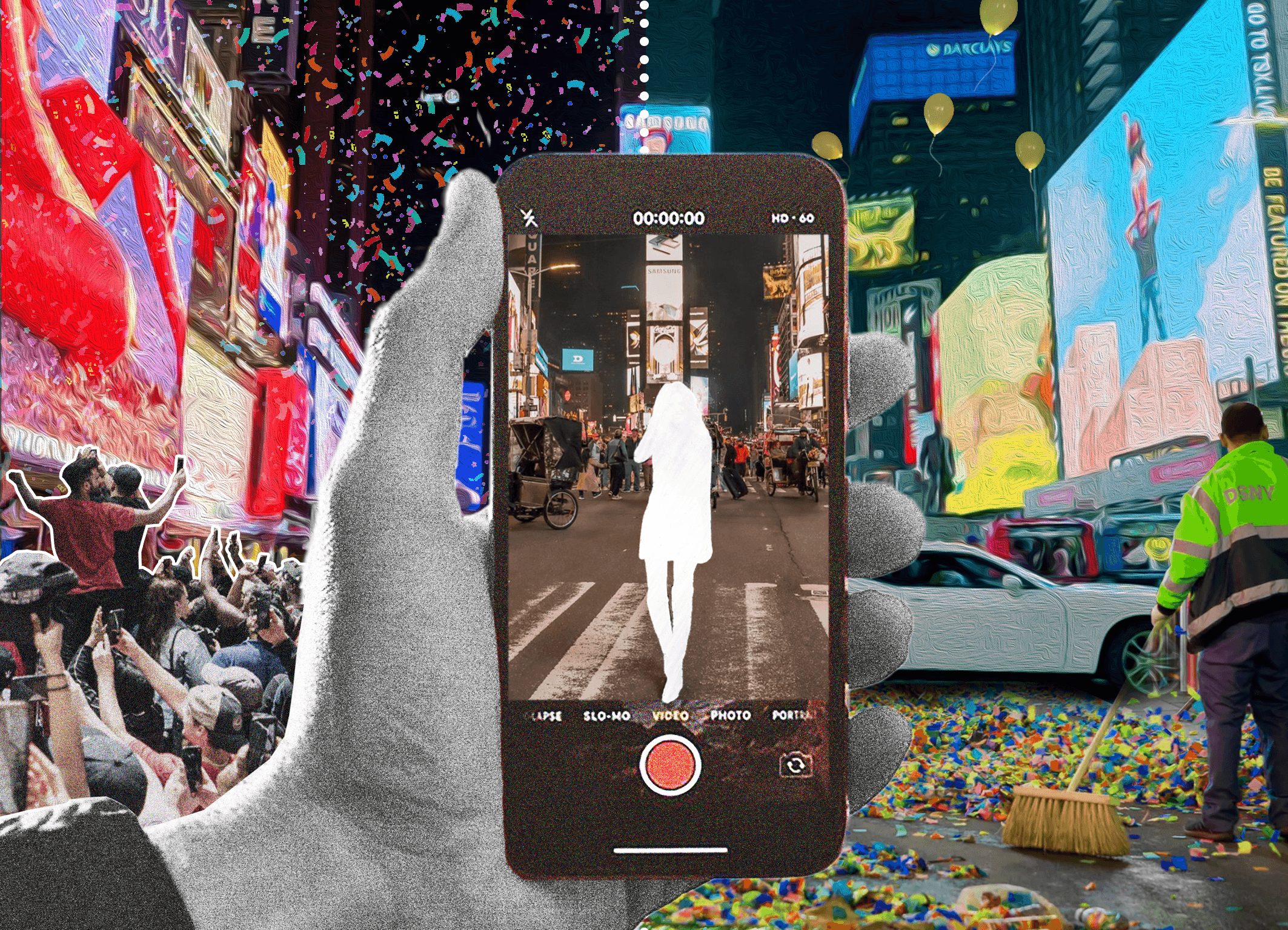
Two Parallel Realities
Instagram has become a powerful tool people use to explore places and it is a database that is created by general public and without an agency. However, we realized there are two New York Cities, one is what we see on social media, and one is the experimental reality that are rendered invisible on a single photo dimension.
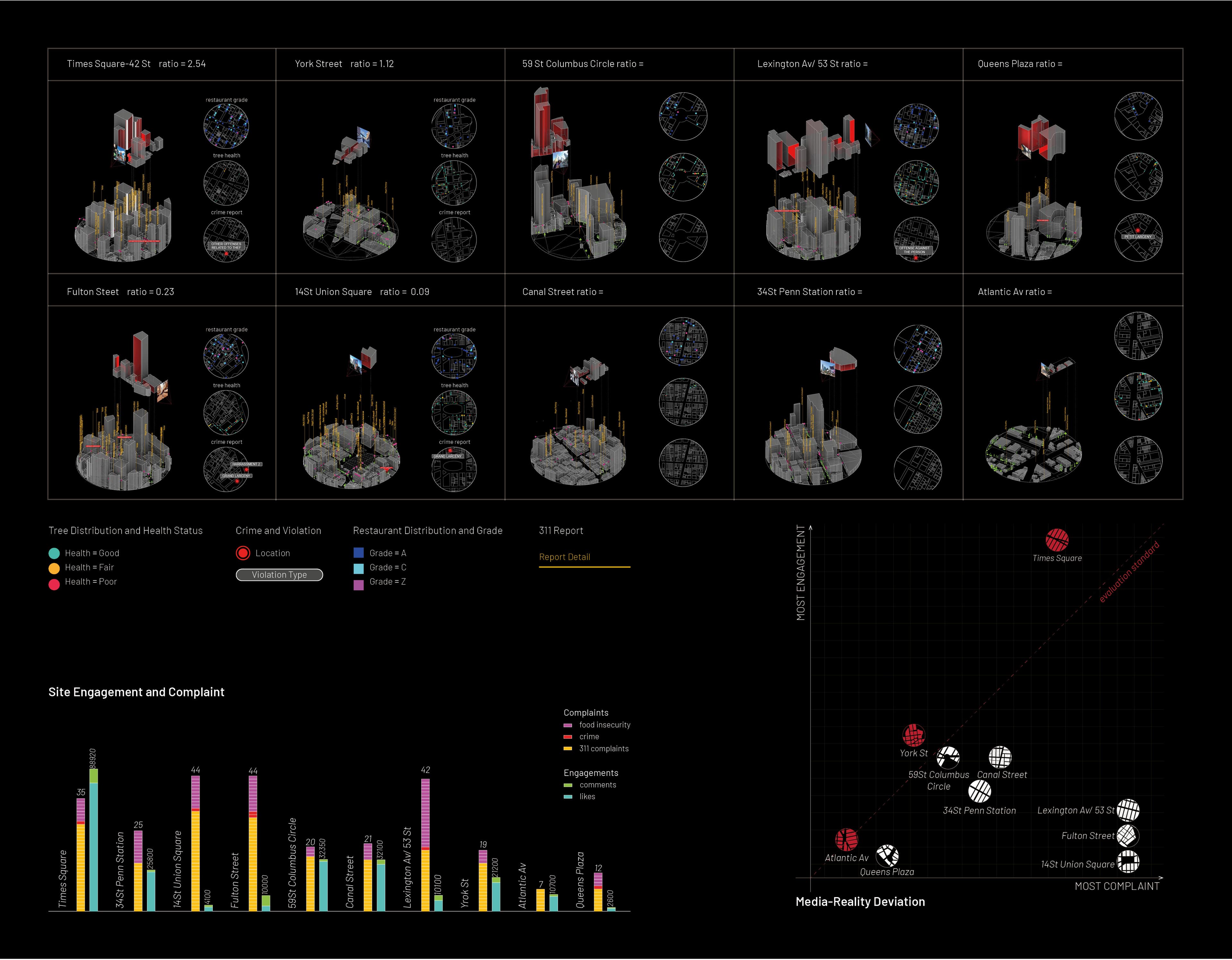
Media-Reality Deviation
The juxtaposition of the reality layer and the social media layer reveals that lots of negative aspects are missed out from the simple posts from social media, and social media has been deliberately depicting public spaces as simple icons.
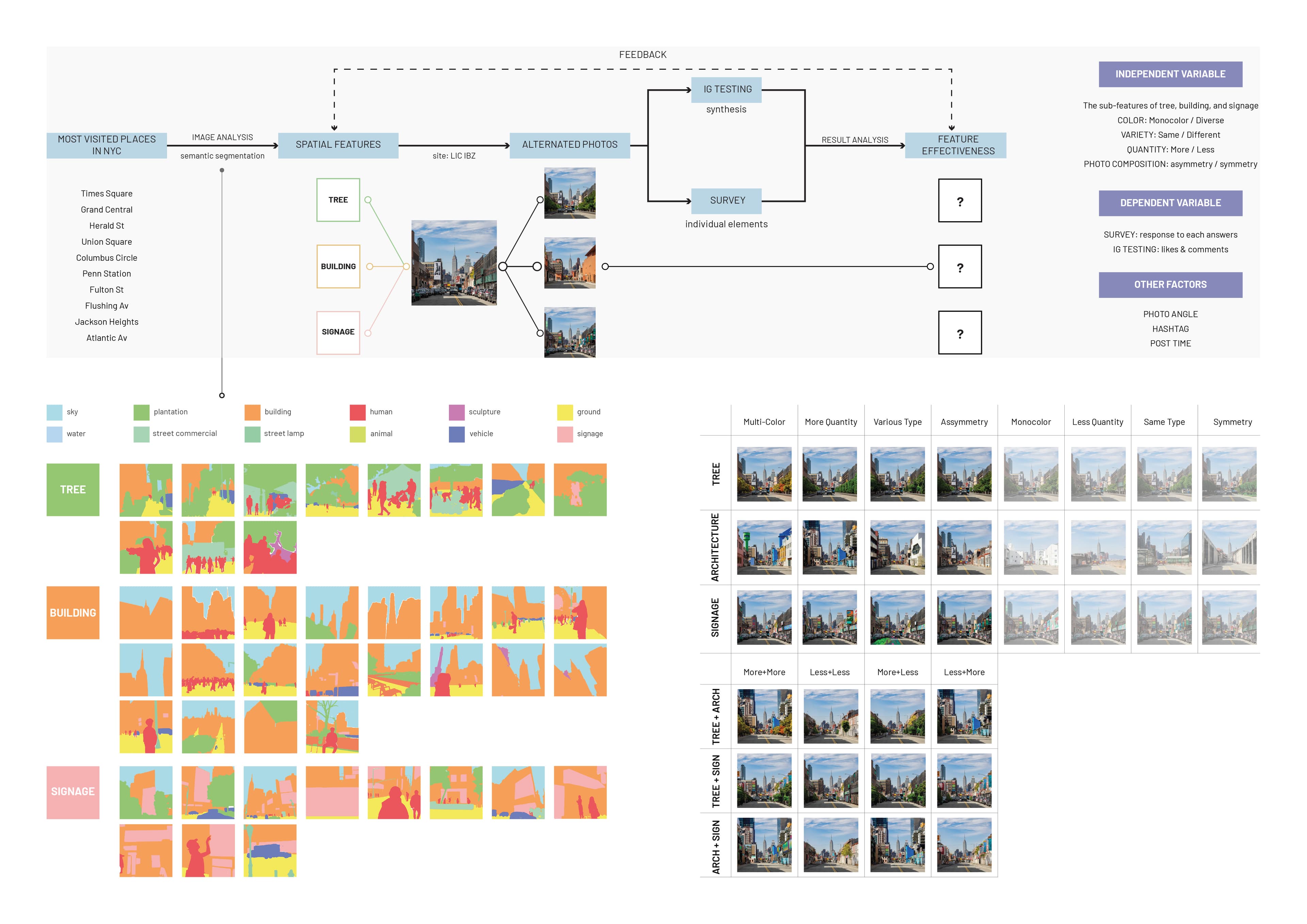
Alternative Generation
We started to wonder: what if we can apply the elements that makes a space popular on social media to another place in the real world?
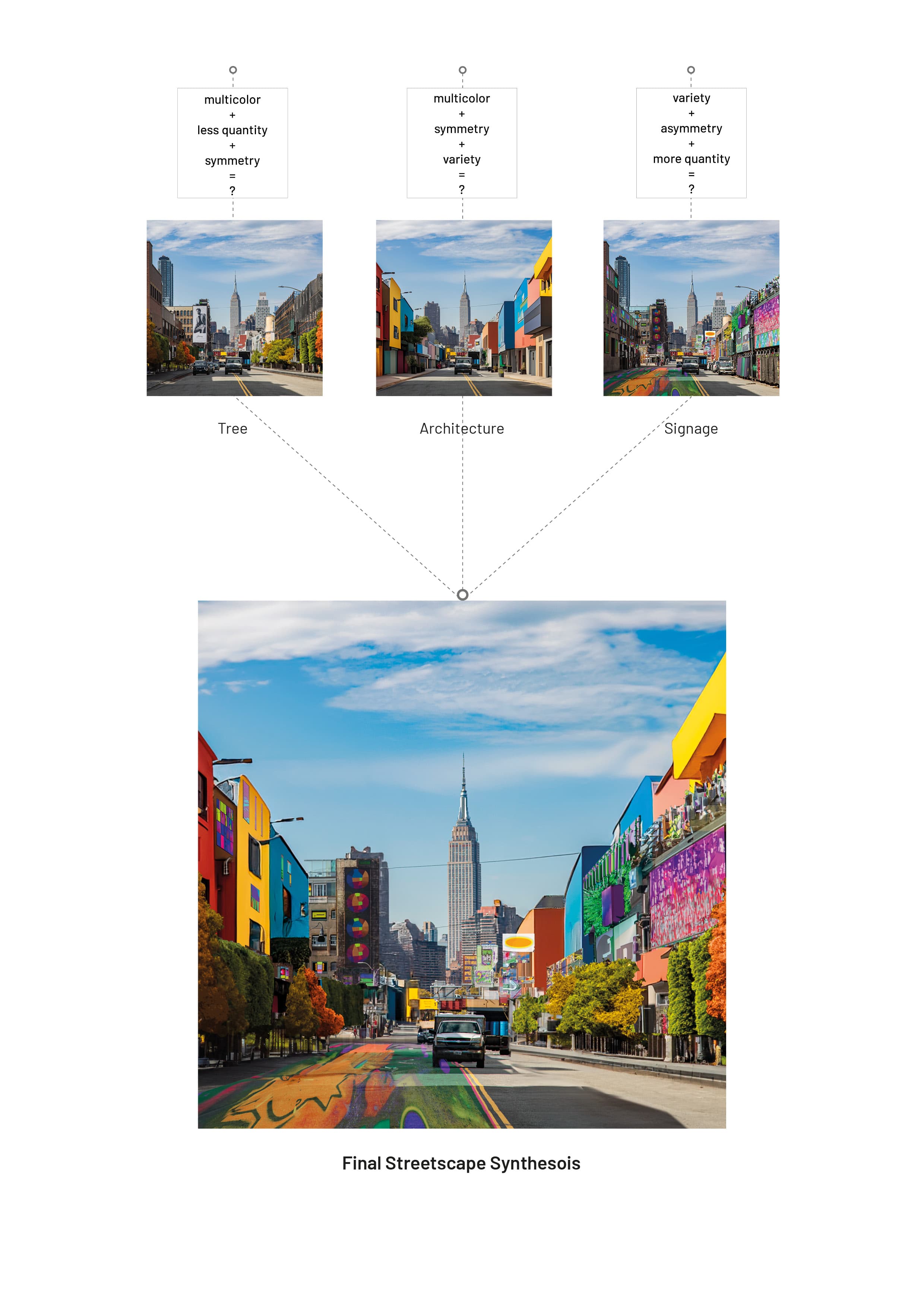
We applied semantic segmentation to the web-scrapped images and extracted the three most popular elements: trees, building facades, and signages. Then we generated alternative images of the same space with multiple variations and synthesis of the elements.
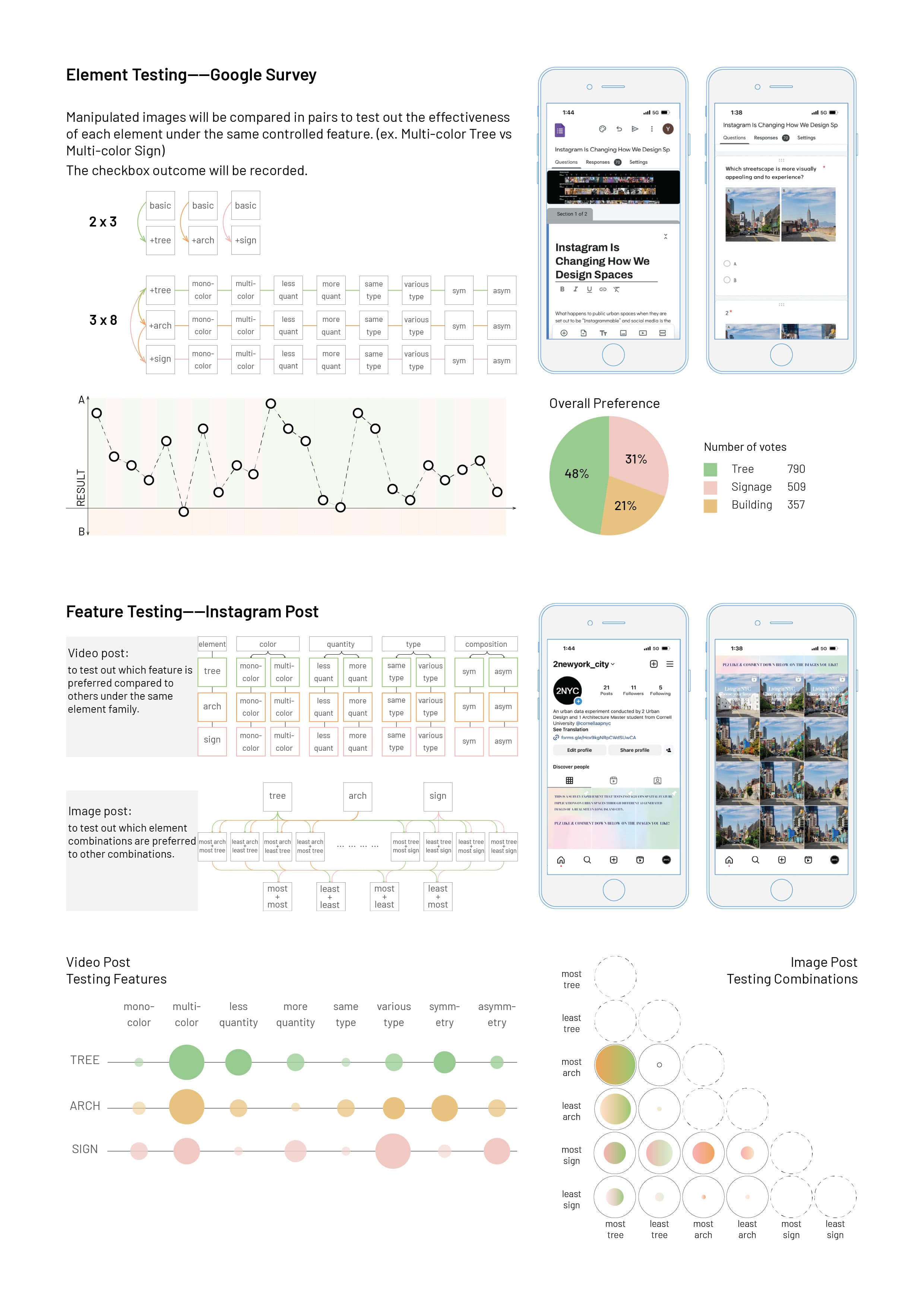
Testing and Feedback
Through these survey and tests, the result shows that the element preference in decending order is tree, signage and architecture. The preferred subfeatures for tree are multi-color, less quantity, and symmetry, for signage are various type, multi-color and asymmetry, for archiecture are multi-color, symmetry and various type.
Another Reality
Based on the survey result, a final streetscape is synthesised to show how to generate a appealing urban public space.
Social media, as a bottom-up research perspective, provides us with the most authentic preferences and needs of the public: there is a demand for more greenery, signage, and a variety of building facades in the city. Those are the perspectives often missing in the urban design process.