Towards a New Affordability
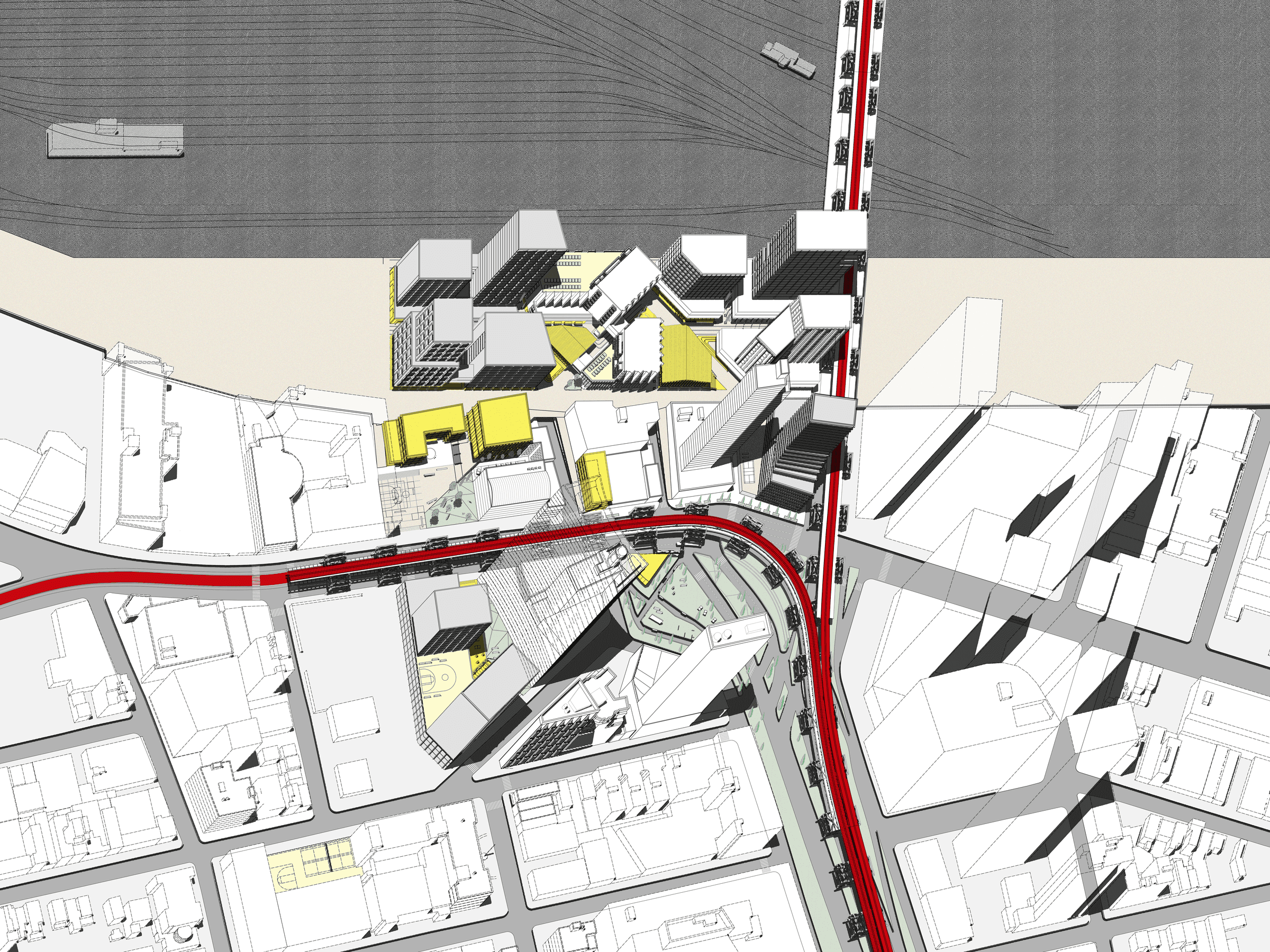
Decks on Deck
In Long Island City, luxury towers have transformed a once working-class neighborhood into an exclusive enclave. This proposal reclaims that balance—envisioning a new, decked community above Sunnyside Yards built on affordability, access, and shared ownership.
Through public-private partnerships and a community land trust, 1,200 affordable homes anchor vibrant public, co-op, and mixed-income communities. Linked by civic corridors and a central plaza, the design prioritizes daily life, reimagining urban development through equity and inclusion.
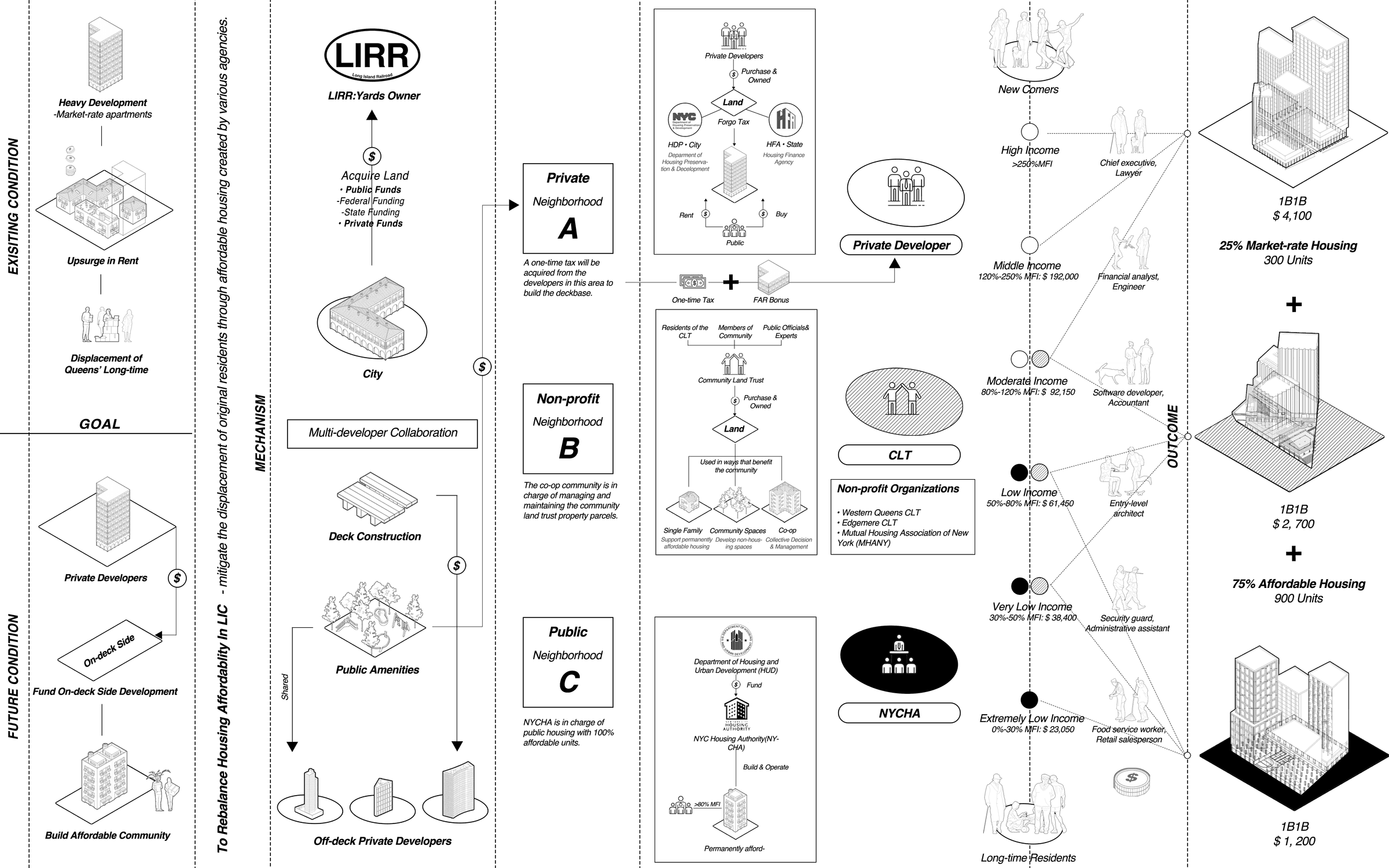
A New Housing Mechanism
The project proposes a multi-developer model where government, community organizations, and private developers each construct and manage one residential cluster above Sunnyside Yard. Land is acquired from the Long Island Rail Road through mixed funding, and a one-time tax on luxury developments helps finance the deck's base and public amenities.
Development rights are divided among private developers, a community land trust, and NYCHA, each with distinct affordability goals—from 50% affordable units in private projects to 100% in public housing—ensuring a balanced, inclusive urban neighborhood.
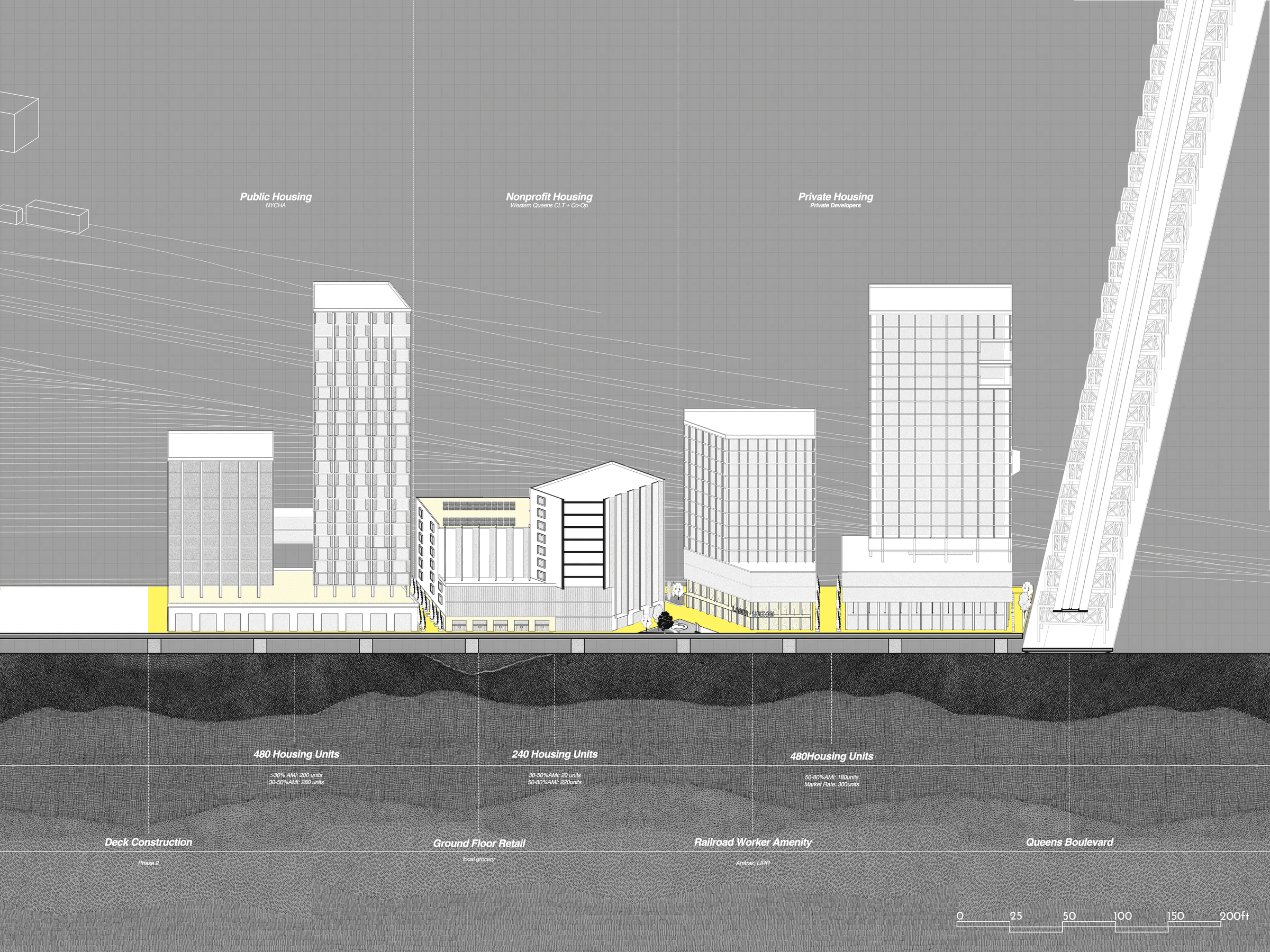
Deck Section
On the deck side, there're three interconnected neighborhoods sharing the same set of public amenities and open spaces.
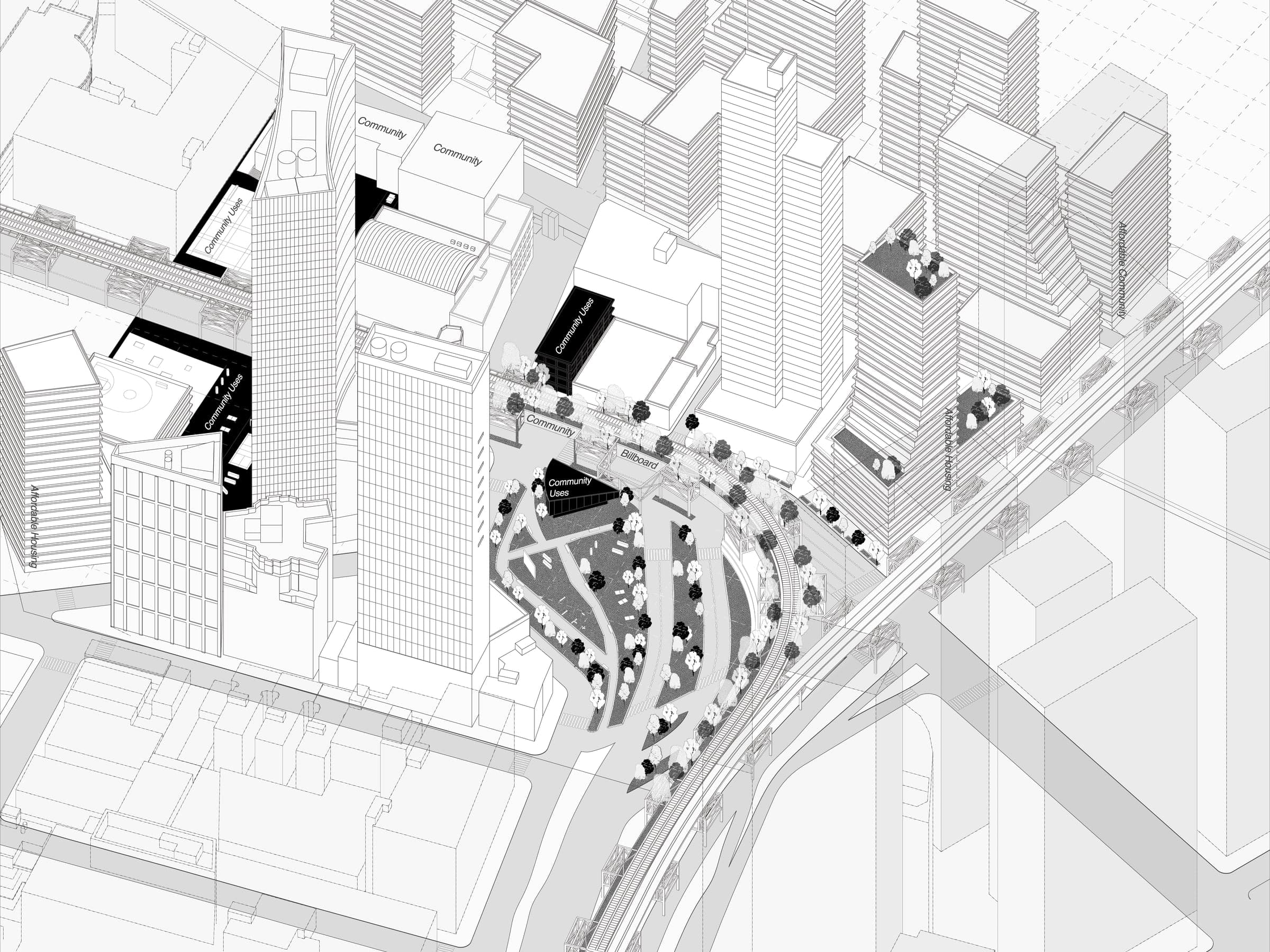
Dutch Kills Green
Large areas of greenery are divided into smaller functional zones, and a new community gathering space.
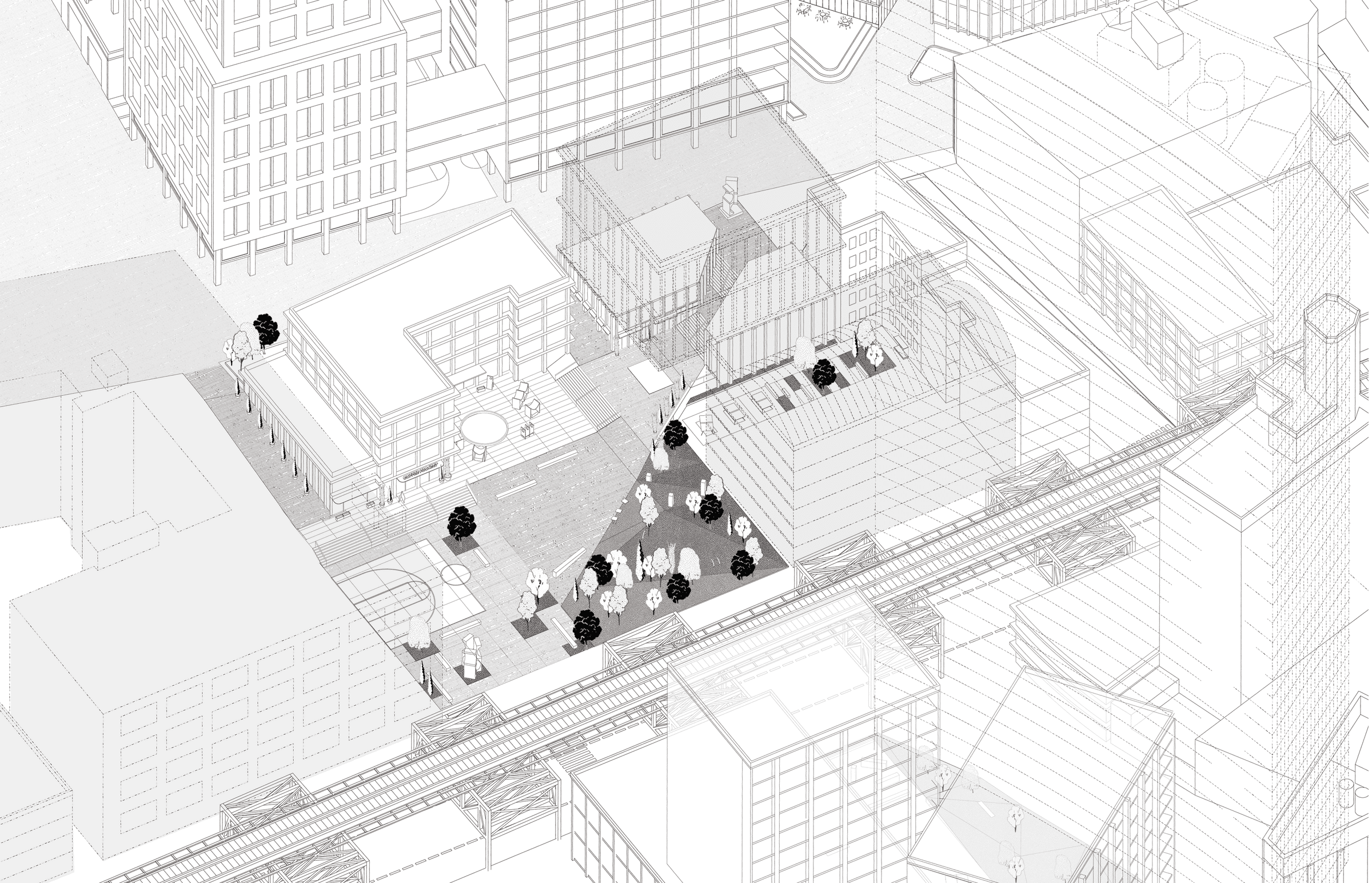
Deck Access
The design proposed to turn a previouly walled-off private dog park and parking lot into a shared space, opening it up to the wider neighborhood use.
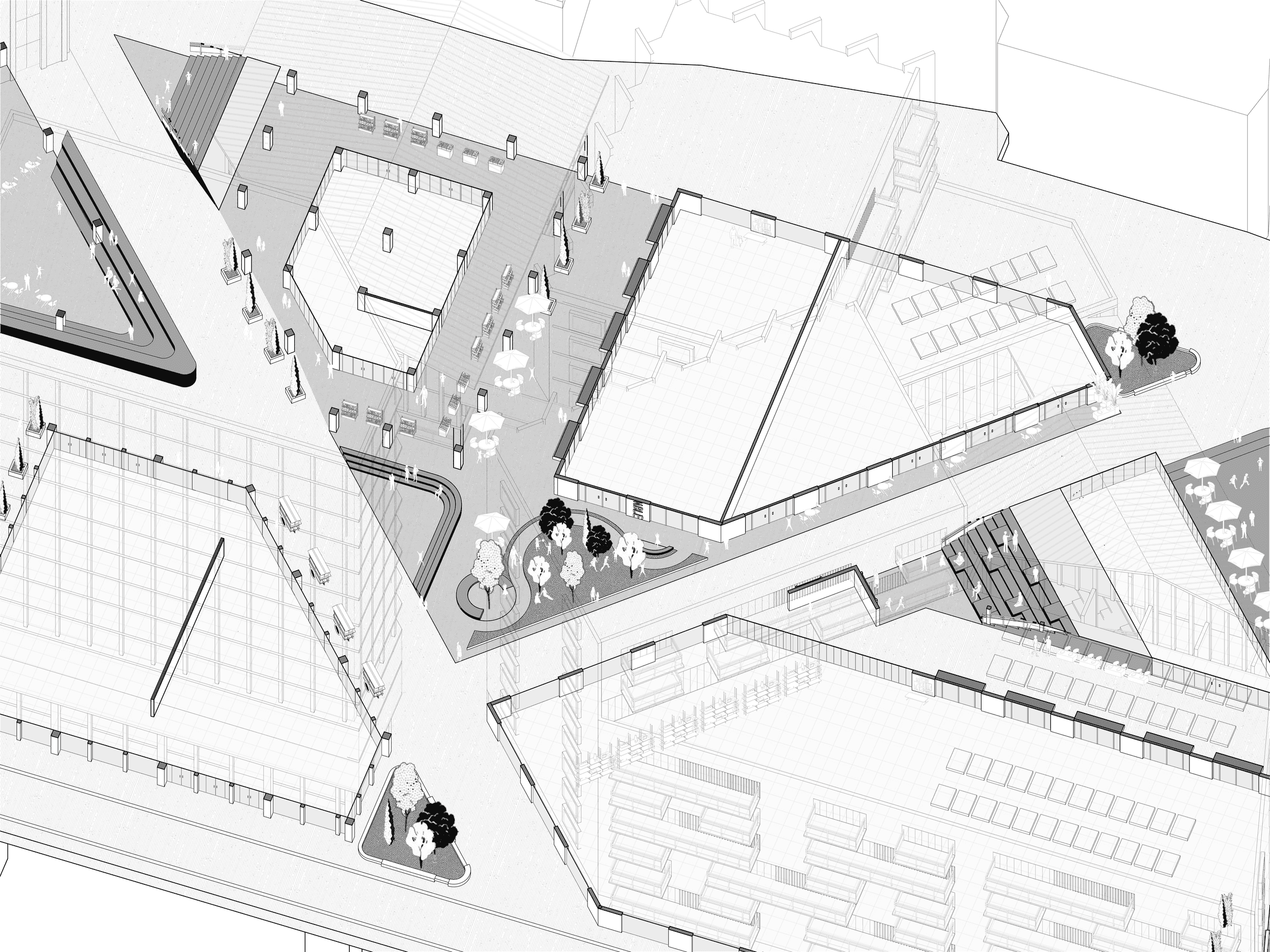
Commercial and Community Corridors
These distinct neighborhoods are conencted through two linear open spaces, a community corridor and a commercial corridor.
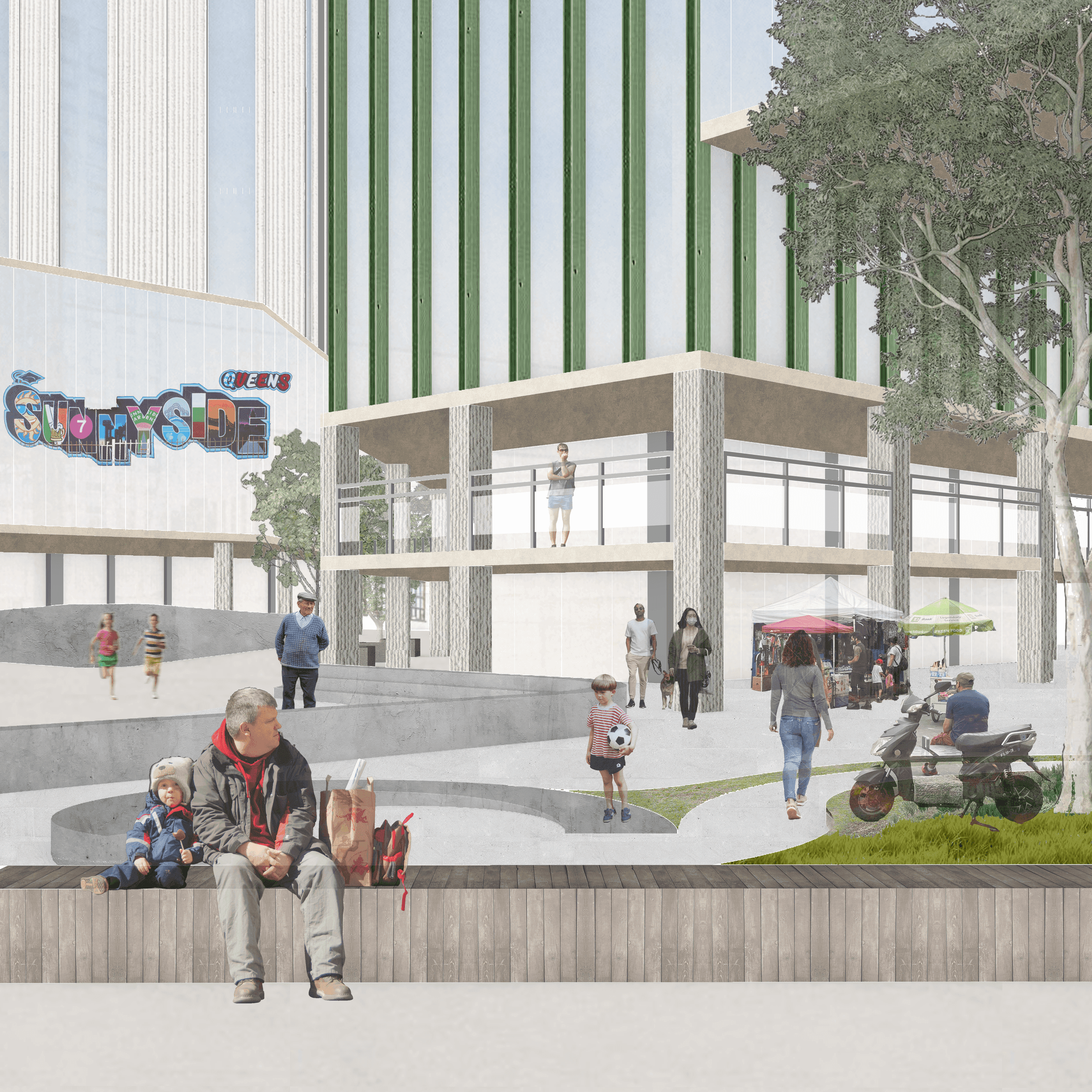
Central Open Space
At the central open space, public spaces are predominantly utilized for commercial and office uses.
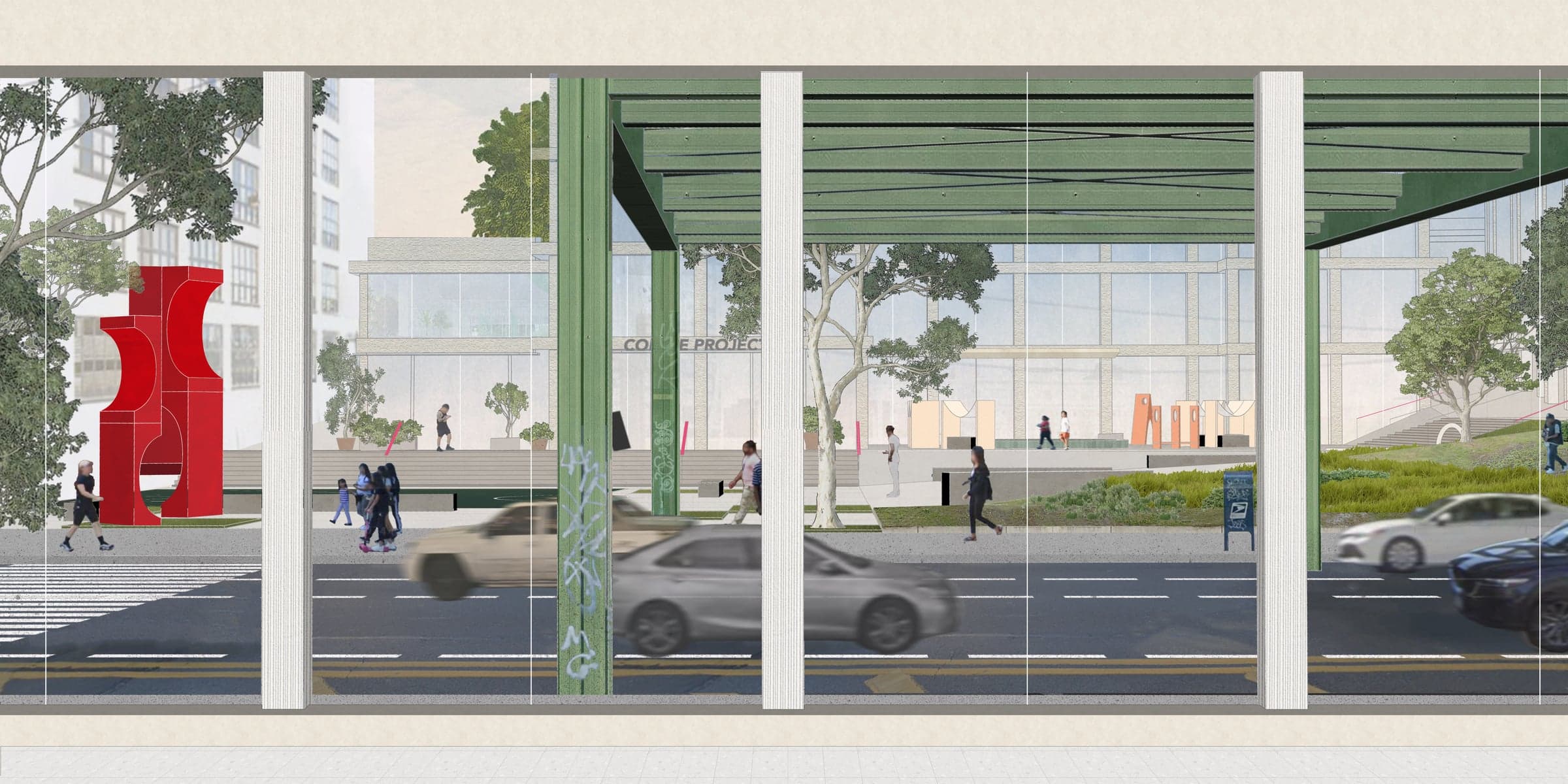
View of the Community Hub under the Elevated Rail Track
The aim of the project is to explore radical and different development strategies, beyond simply promoting real estate capital growth. It envisions to include more community-empowered housing solutions in the way we build and sustain new neighborhoods.