Life Condenser
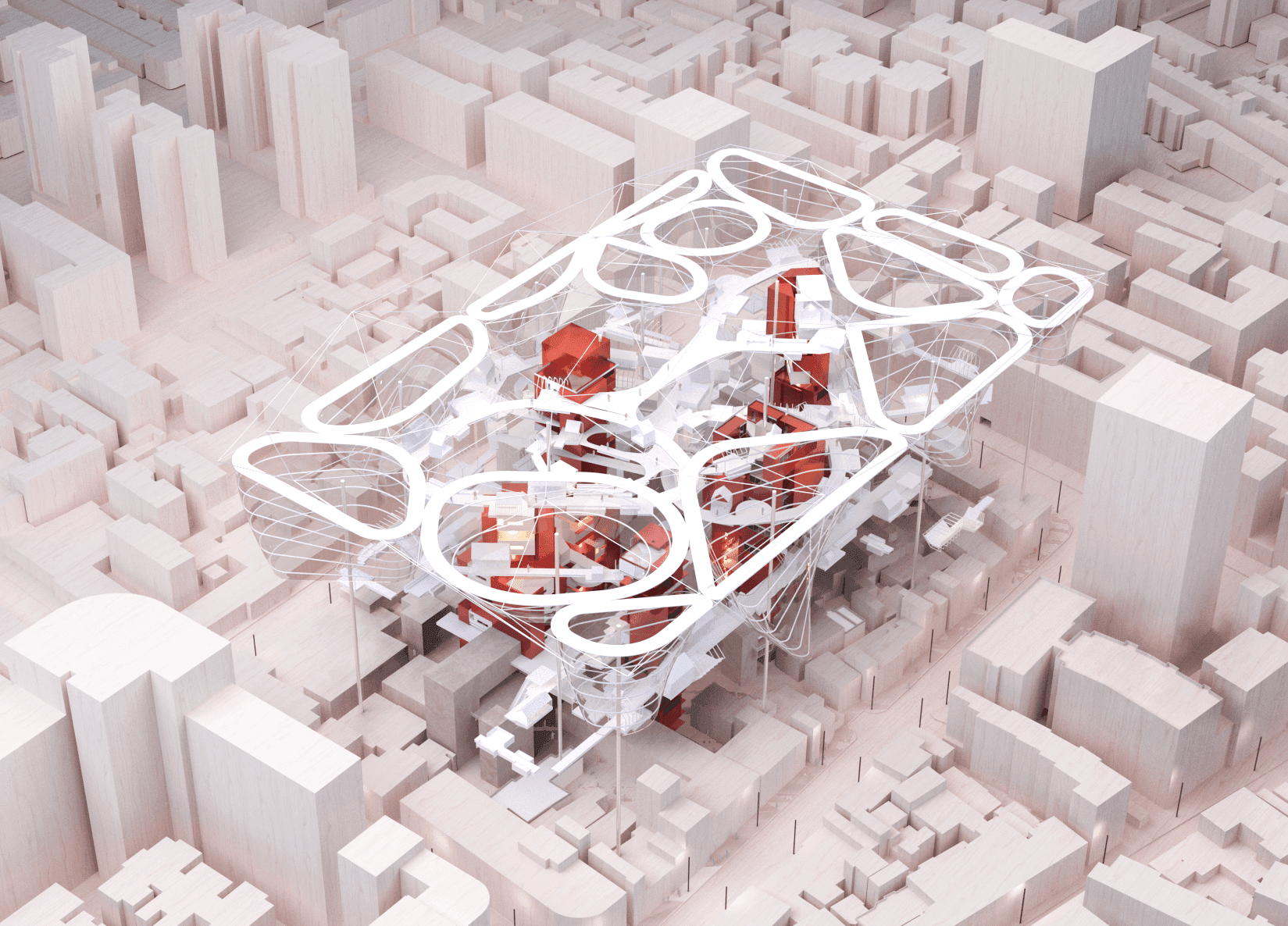
A New Paradigm of Living
China's rapid urbanization consumed farmland but left rural homesteads intact, giving rise to urban villages—spaces seen as chaotic yet rich in social life. This project reimagines their dense, mixed-use fabric by using streets as a structural skeleton linking housing layers vertically. The design restores neighborly closeness and adapts traditional living patterns to contemporary high-density life.
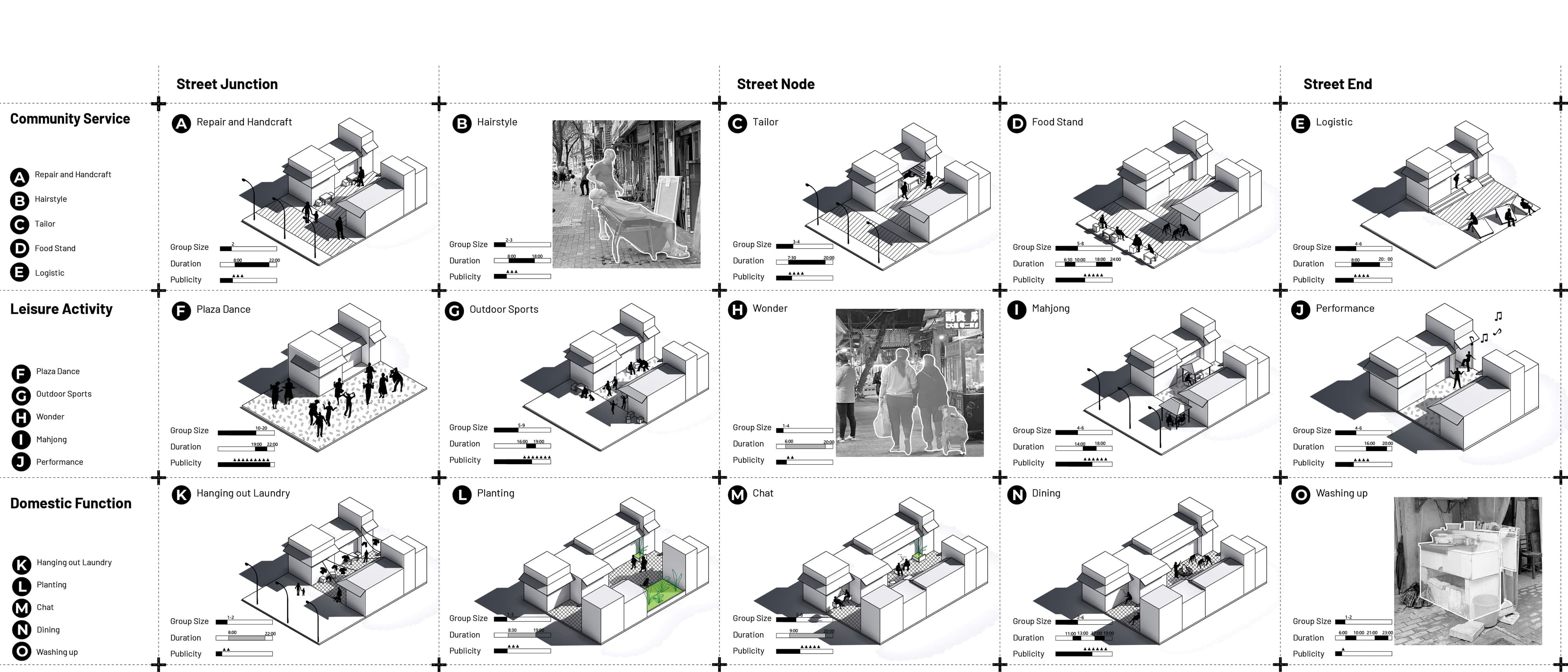
Existing Street Typology
Street typologies of the existing urban villages are classified by its location and function.
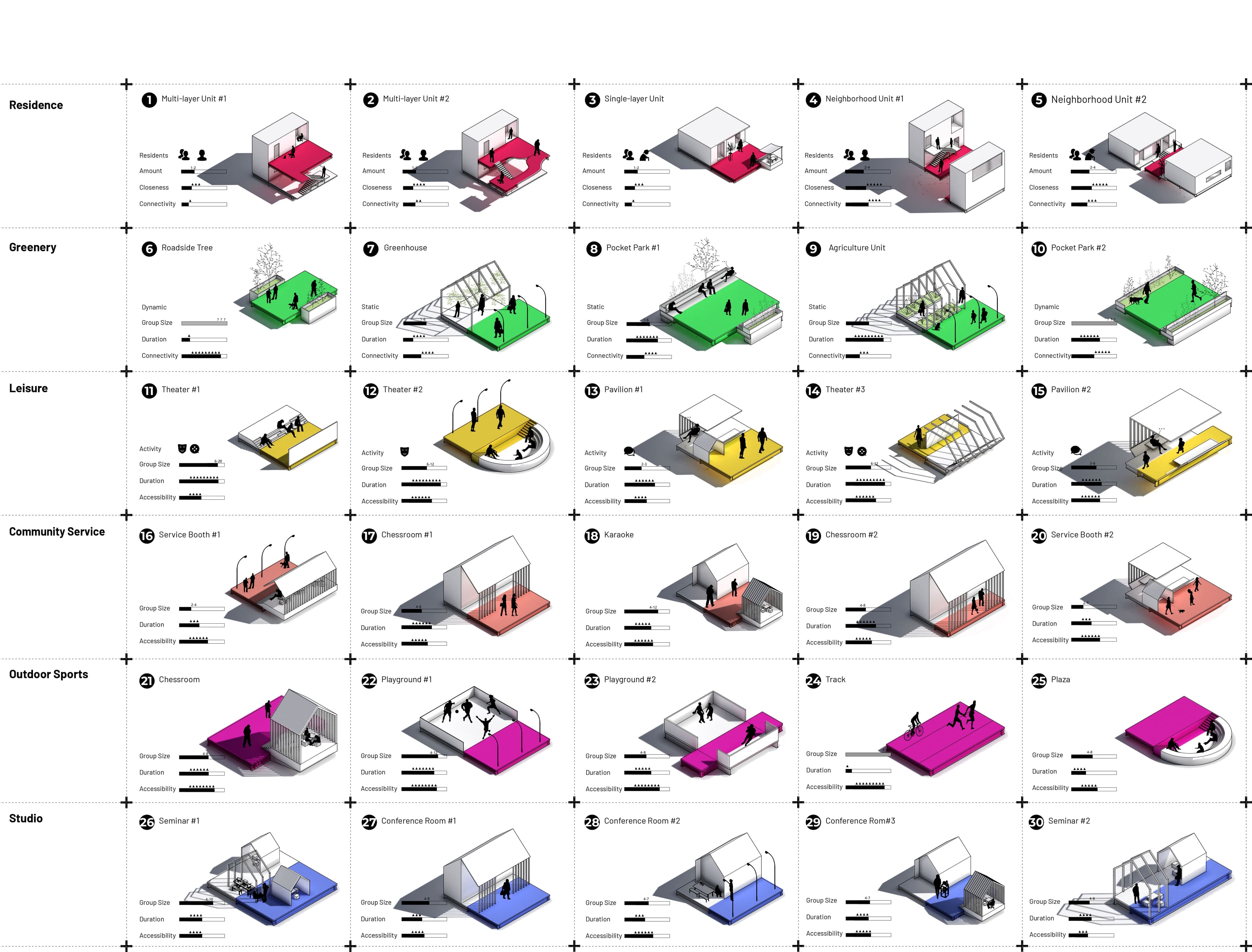
Proposed Street Units
The project proposed new street units to connect the housing units, imagining a residential street system that is not only a circulation space but also a living space.
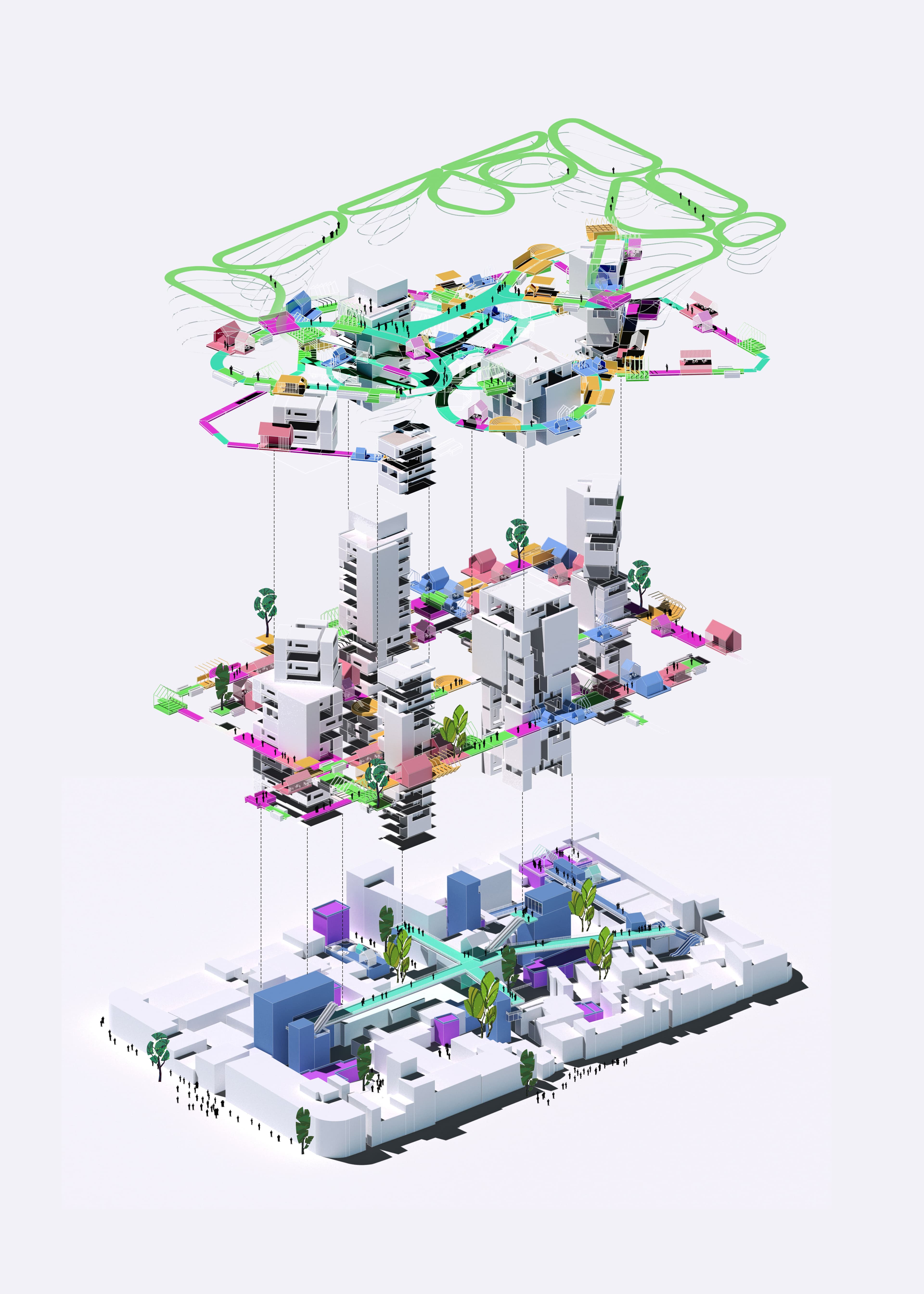
Layers of Different Residential Patterns
Past Residence Layer:
Preserves the old city's street patterns to maintain social closeness while inserting shared public and outdoor spaces.
Present Residence Layer:
Uses interconnected streets of varying scales to link housing, host public life, and create smooth transitions between spaces.
Future Residence Layer:
Adopts a decentralized layout where living, public, and green spaces intertwine, fostering integration and interaction.
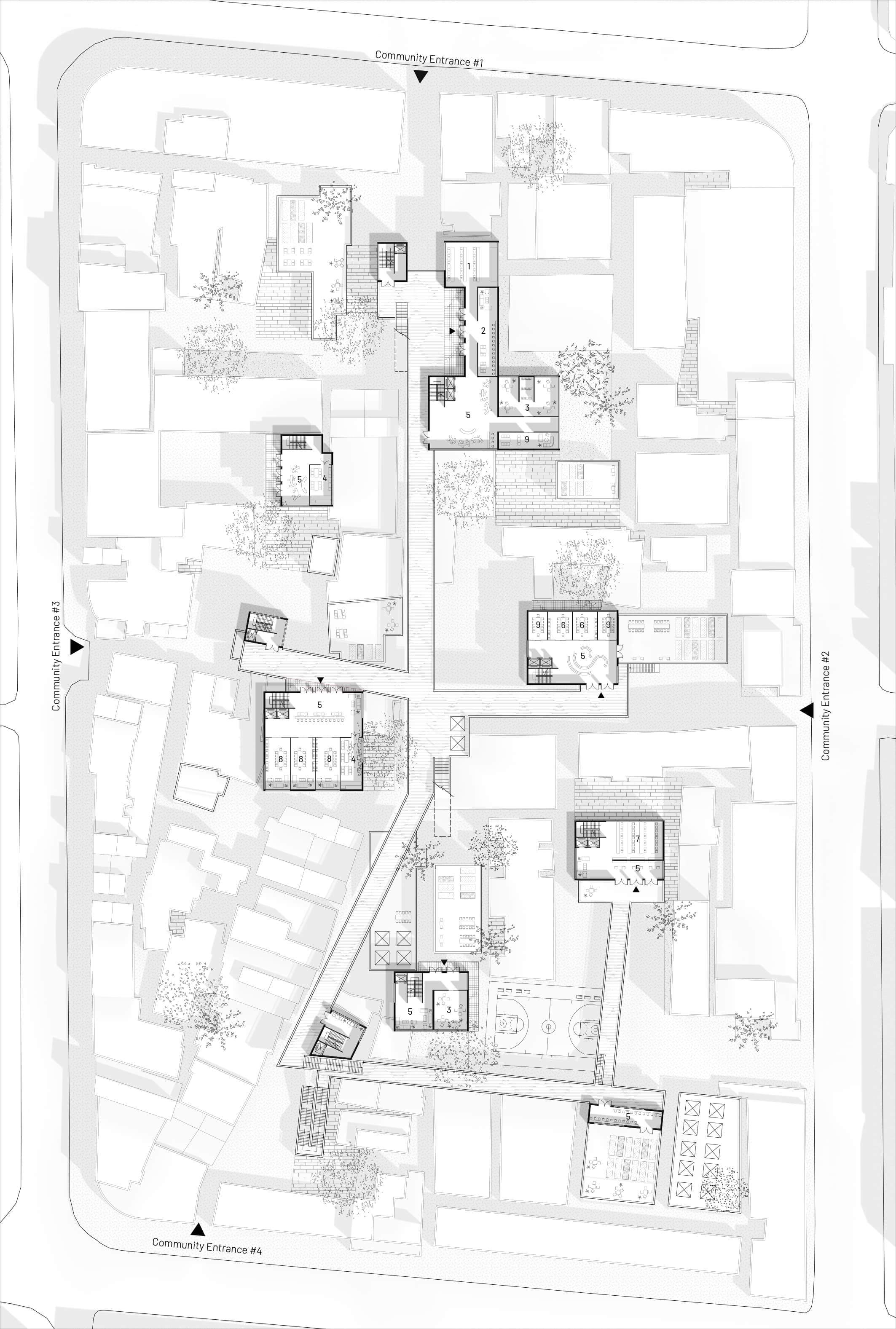
Renovation of the Existing Urban Village
Preserves the old city's street patterns to maintain social closeness while inserting shared public and outdoor spaces.
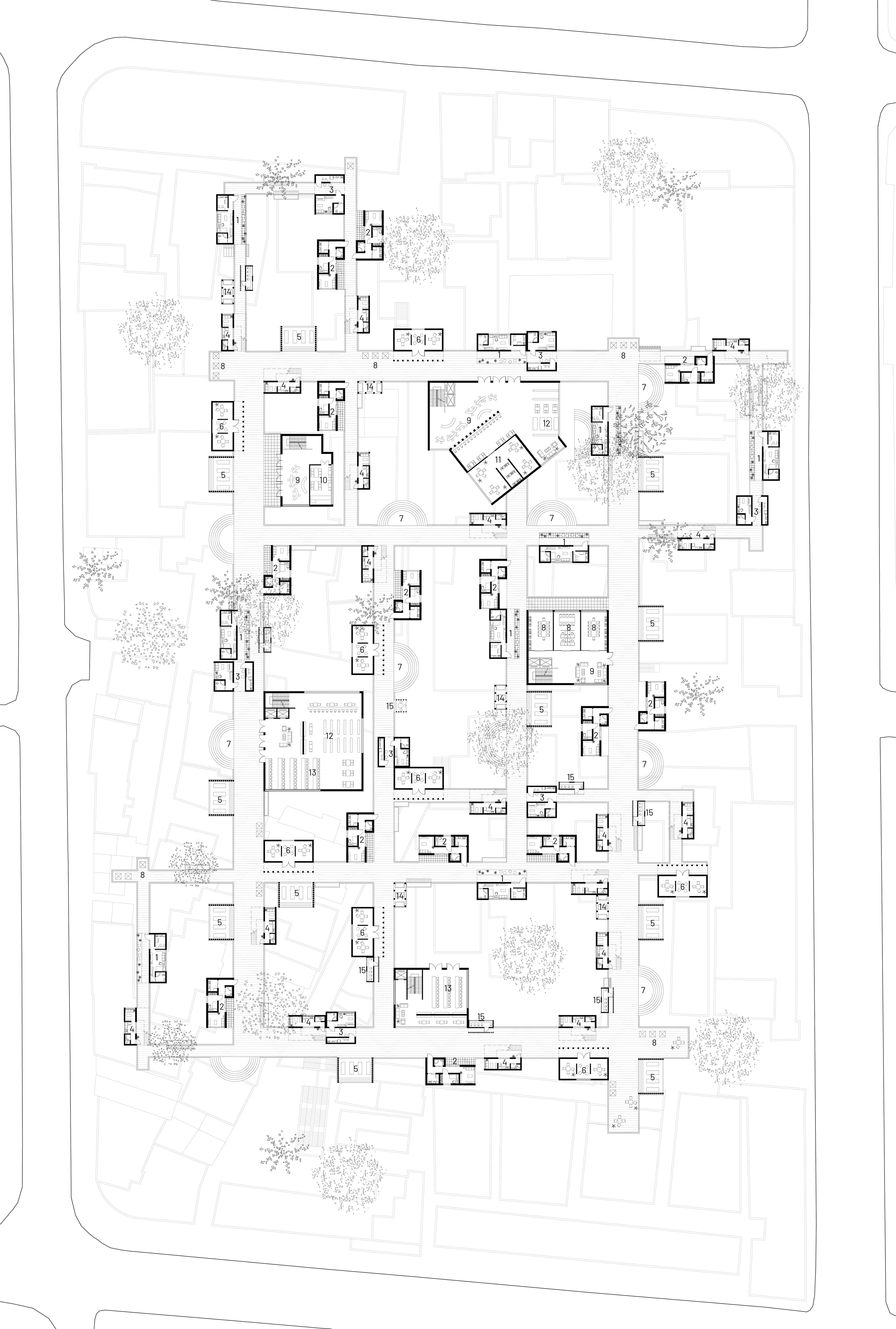
Residential Layer
Four types of residential units are defined based on research and studies of the residential population, which can provide living space for people of different ages and living patterns. However, private space is controlled within a certain area, and public space is inserted in the middle of each residential group to promote interaction between neighbors.
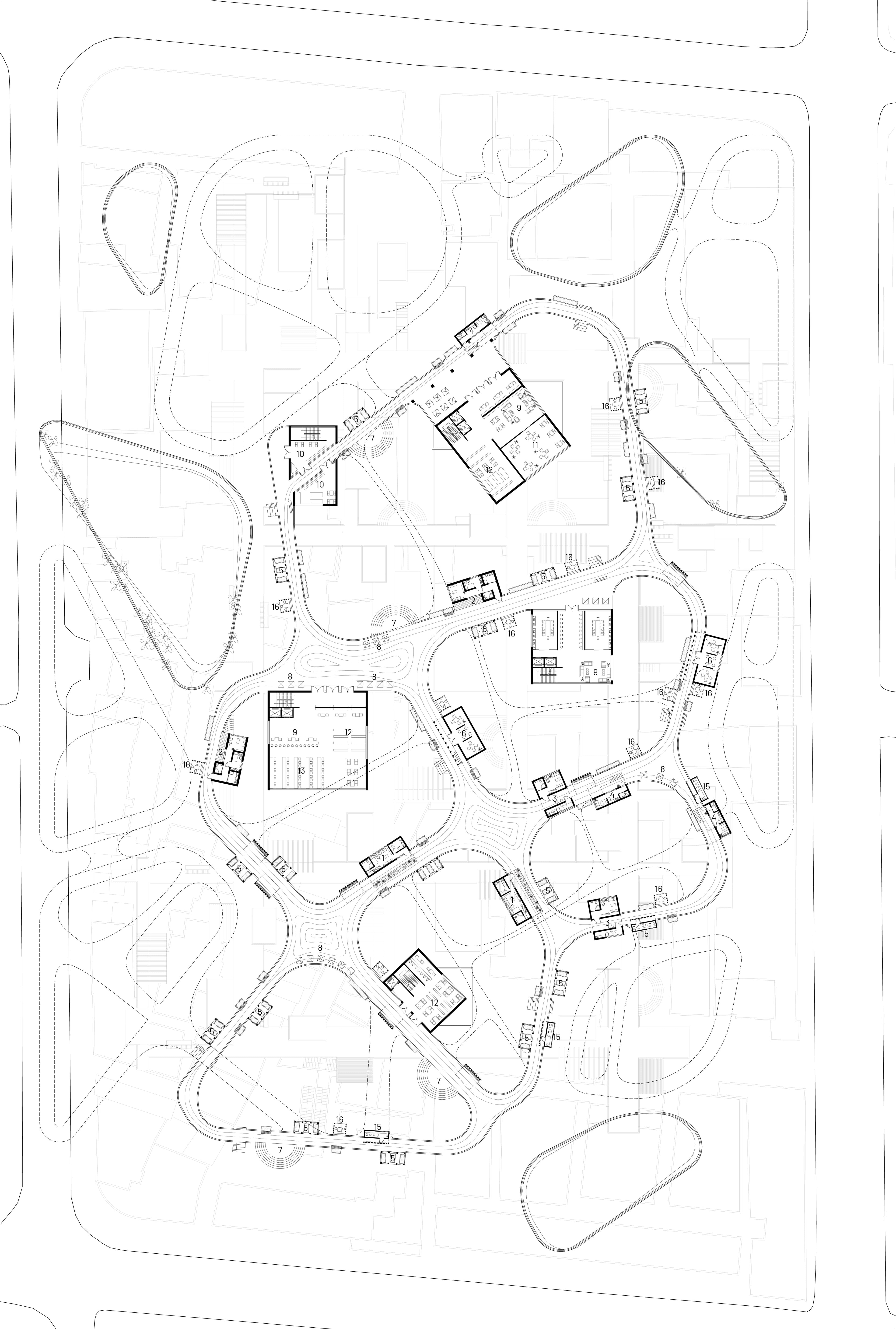
Public Space Layer
In the future, the residential model will reduce the hierarchy of streets, and the clusters will have the same hierarchy and be inter-connected in a network to form a decentralized organization model. At the same time, the upper streets will be used as sports tracks and planting frames will be erected at the top.
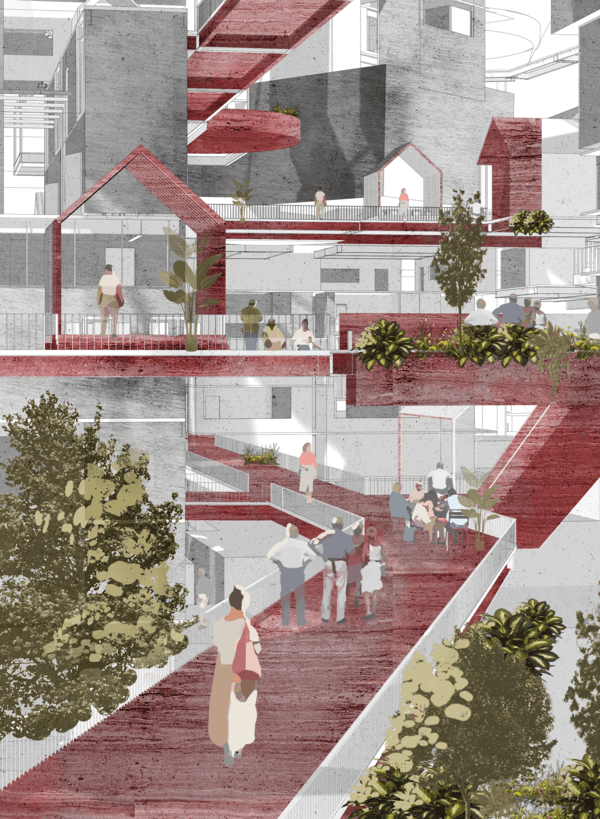
Street as a Structural Skeleton
In this proposal, street were extracted as a skeleton to link different housing units and different layers are superimposed with each other in terms of height. The goal is to re-establish the closeness between neighbors, and traditional forms are inherited while meeting the demand for high-density living space.