Nature as a Core
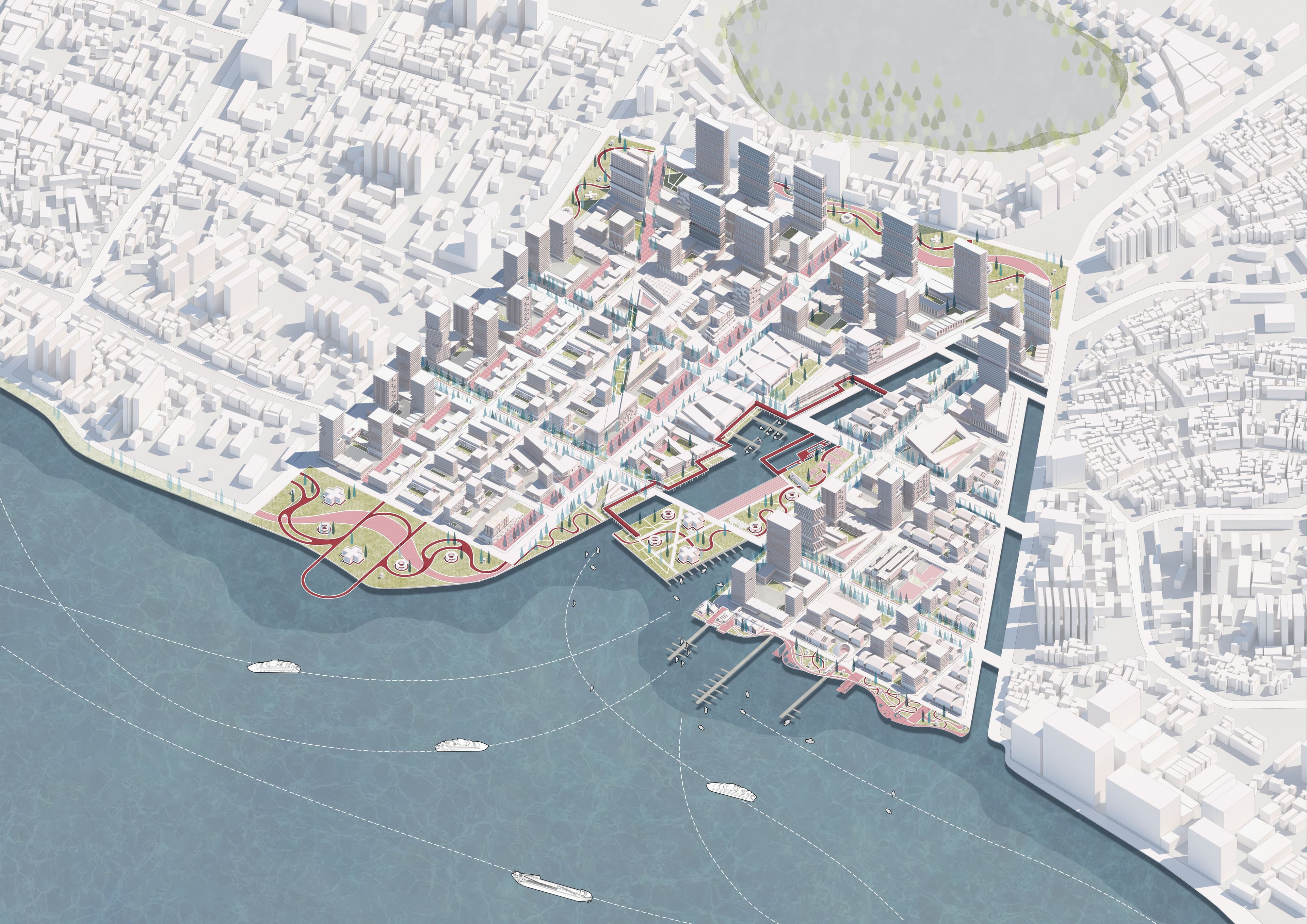
The Innovation Park: A New Urban Gateway
As Wuhan's industry moved to the outskirts, the former shipyard on the Yangtze's east bank was left abandoned. This project transforms the brownfield into an innovation park—a new urban gateway where factories and dormitories become spaces for work, living, and culture.
Public spaces unfold around the old dock, framed by new buildings and linked by green corridors that lead to the river. The design reconnects the site with the city and nature, offering a fluid sequence of spaces where industry's past meets the vitality of urban life.
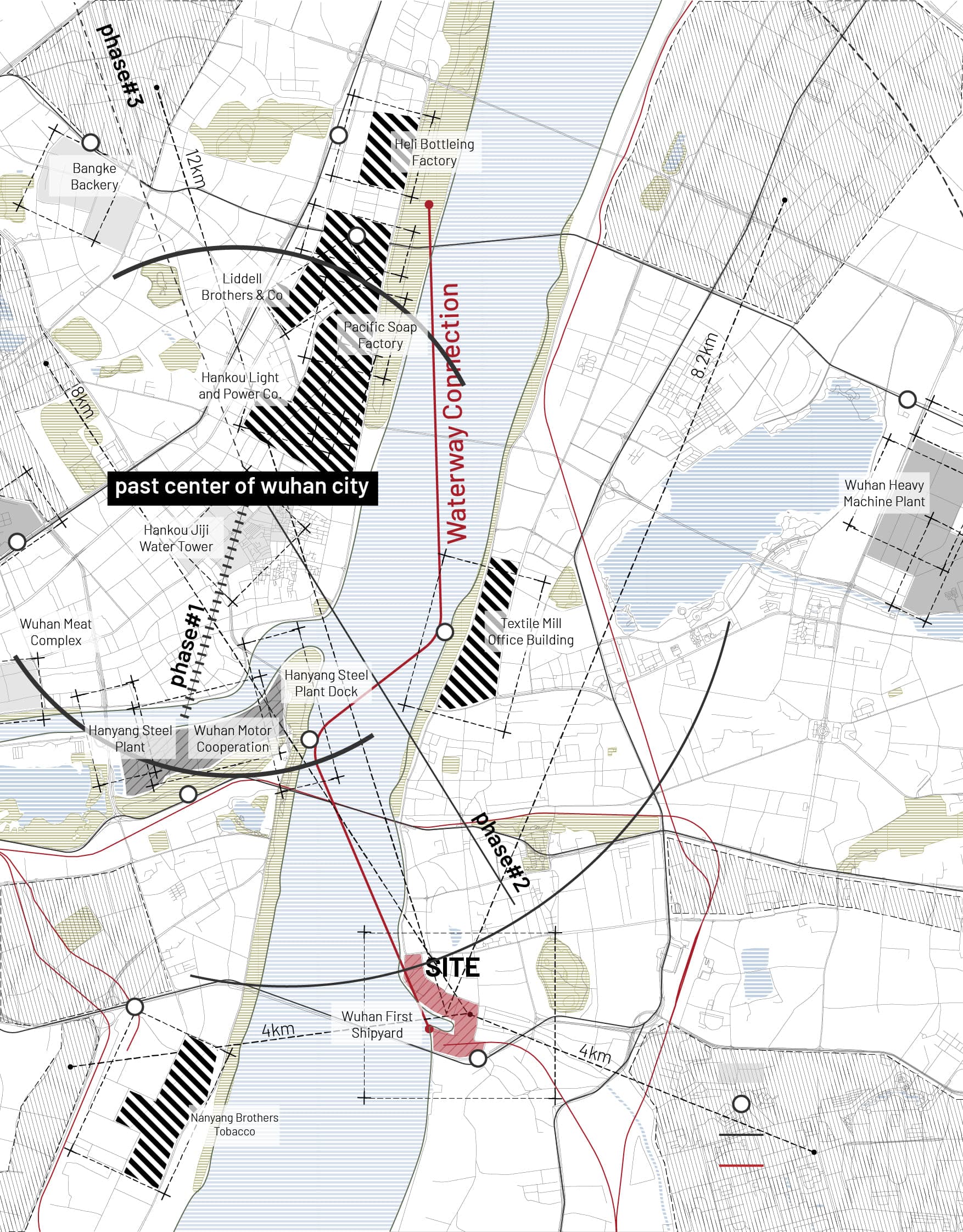
Transformation and Connection of Former Industrial Campus
Wuhan built many factories along the Yangtze River in the funding years of the country, forming the Yangtze River Industrial Belt. As the periphery of Wuhan expanded, idustrials zones were diverted to the outskirts of the city, leaving industrial brownfield to be transformed.It is found that most industrial sites are transformed into commercial pedestrian streets, and a few are transformed into science and technology business parks serving nearby universities.
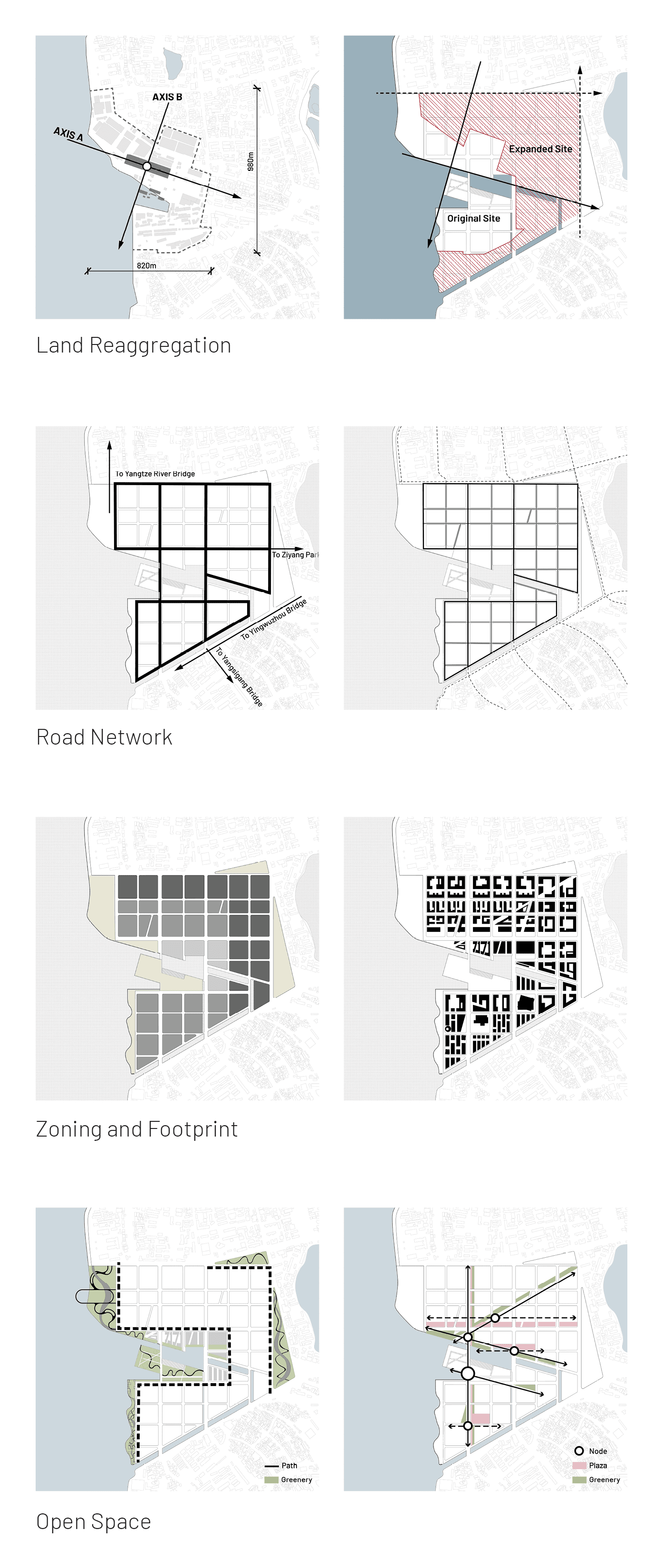
Transformation Process
The shipyard site is integrated with the worker residential site to form a new campus. The design proposed the road network, building footprint, and the open space system based on the district scale and the scenery analysis.
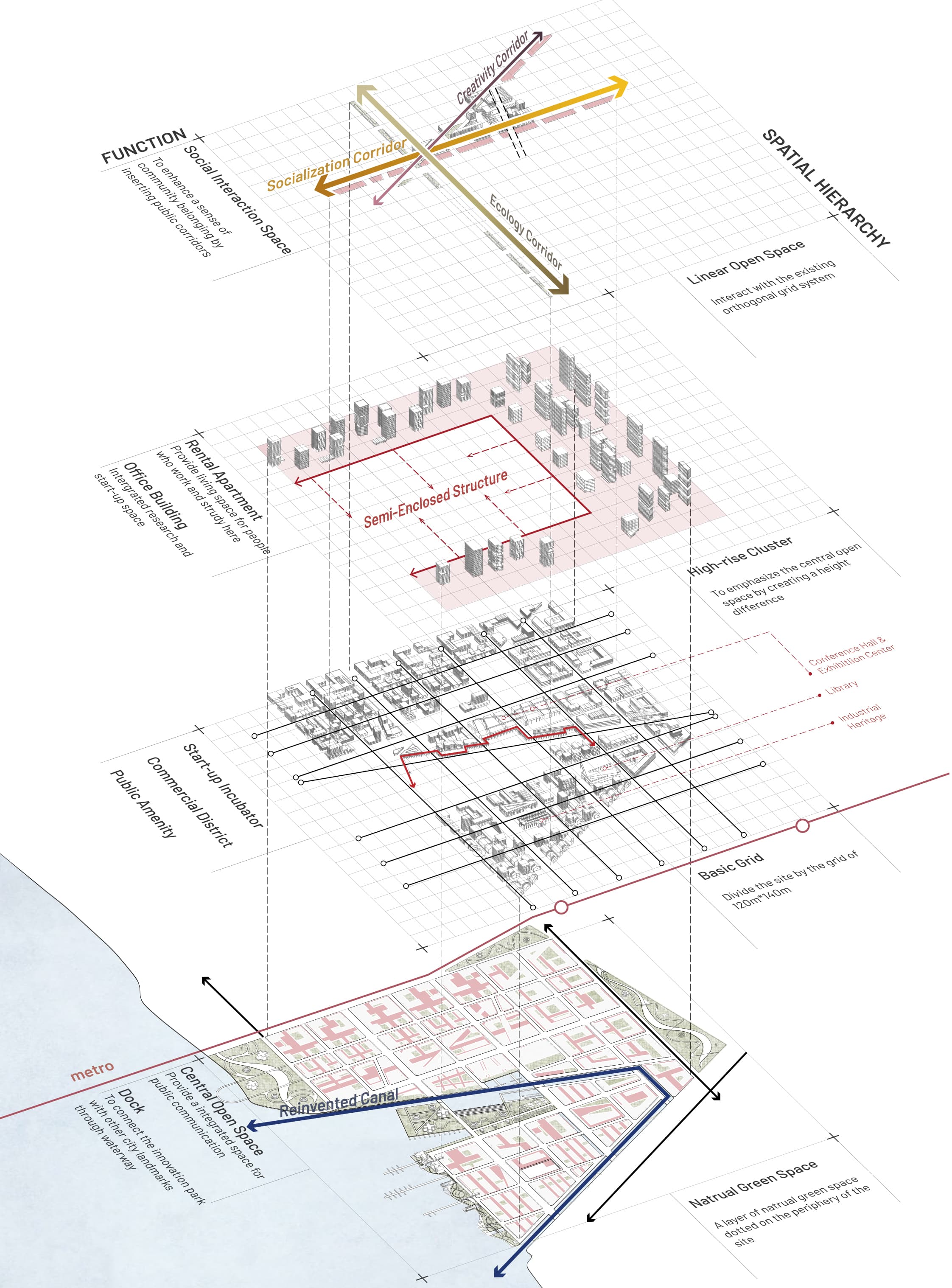
Function and Spatial Layers Diagram
The most distinctive feature of the park is its semi-encircling structure, with the open space at the centre and the high-rise buildings on the other three directions. Three linear open spcace are designed to enliven the site and a linear one continuous trail is set to bridge the central greenland to other parts of the waterfront.
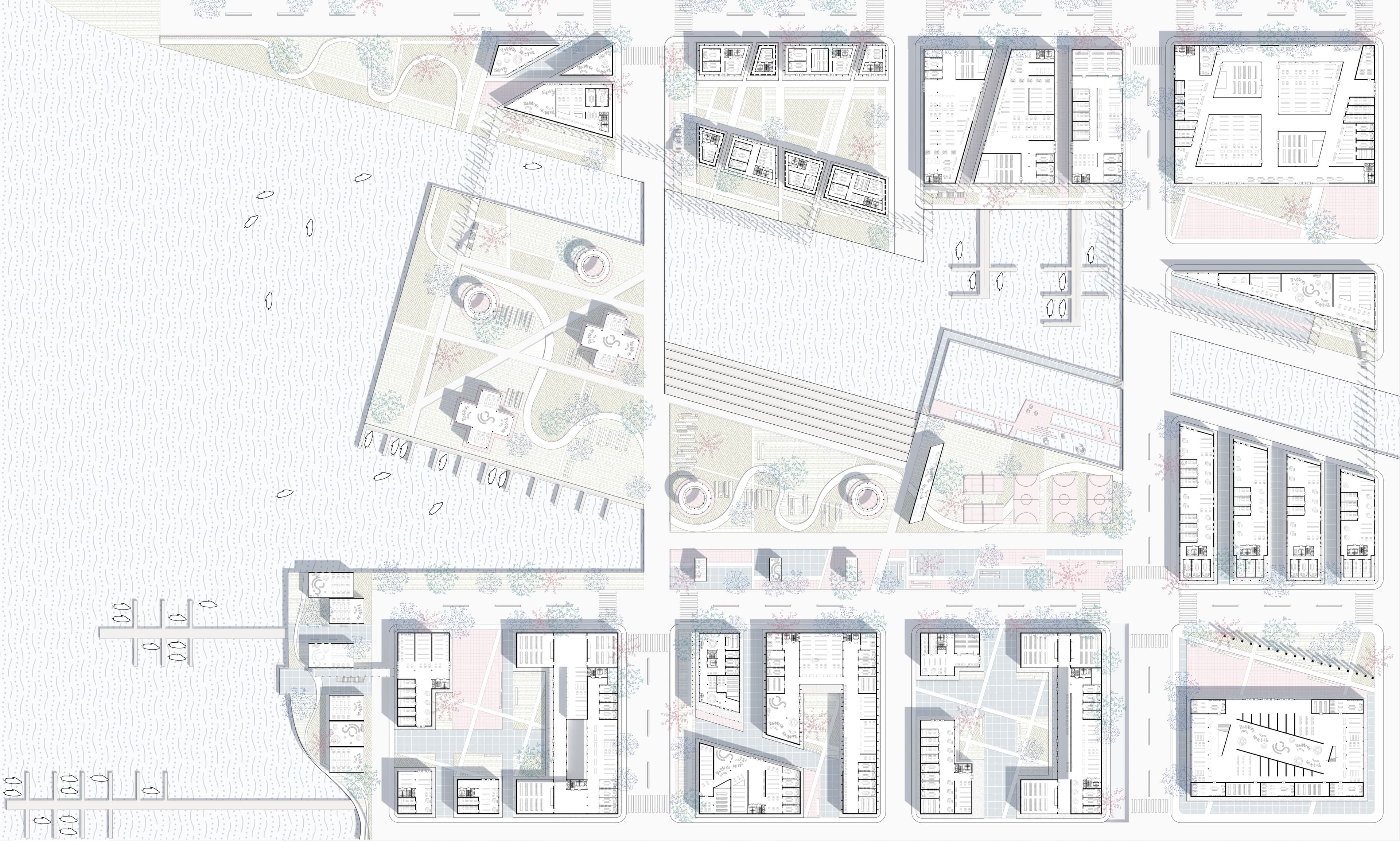
Ground Floor Plan
The center of the semi-enclosed space is a designated open space, connecting ferry docks, pedestrian paths, and vehicle routes.
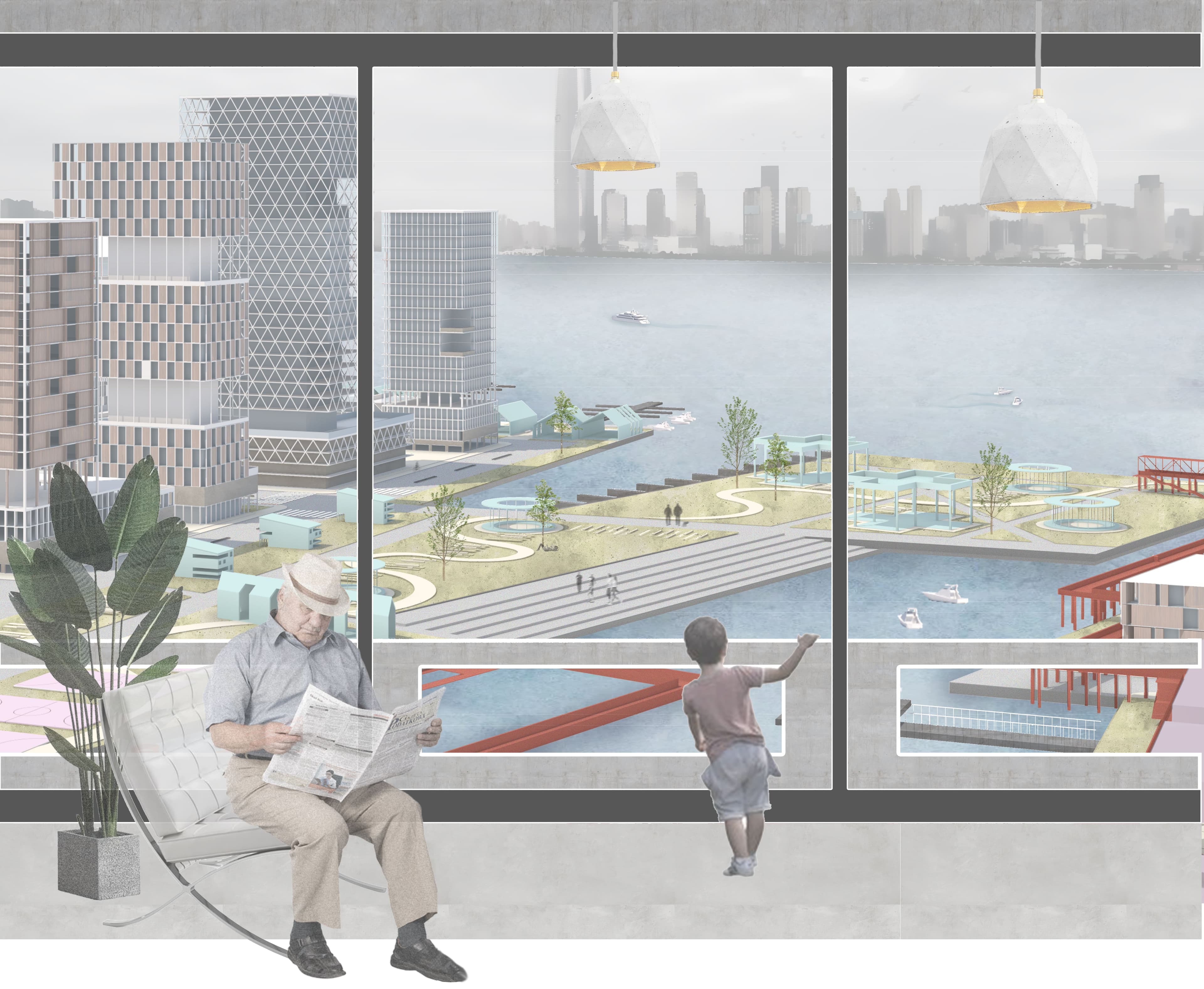
A View from the High-Rise
The mutual visual link between the open space and the integrated space provide active interactions between different groups.
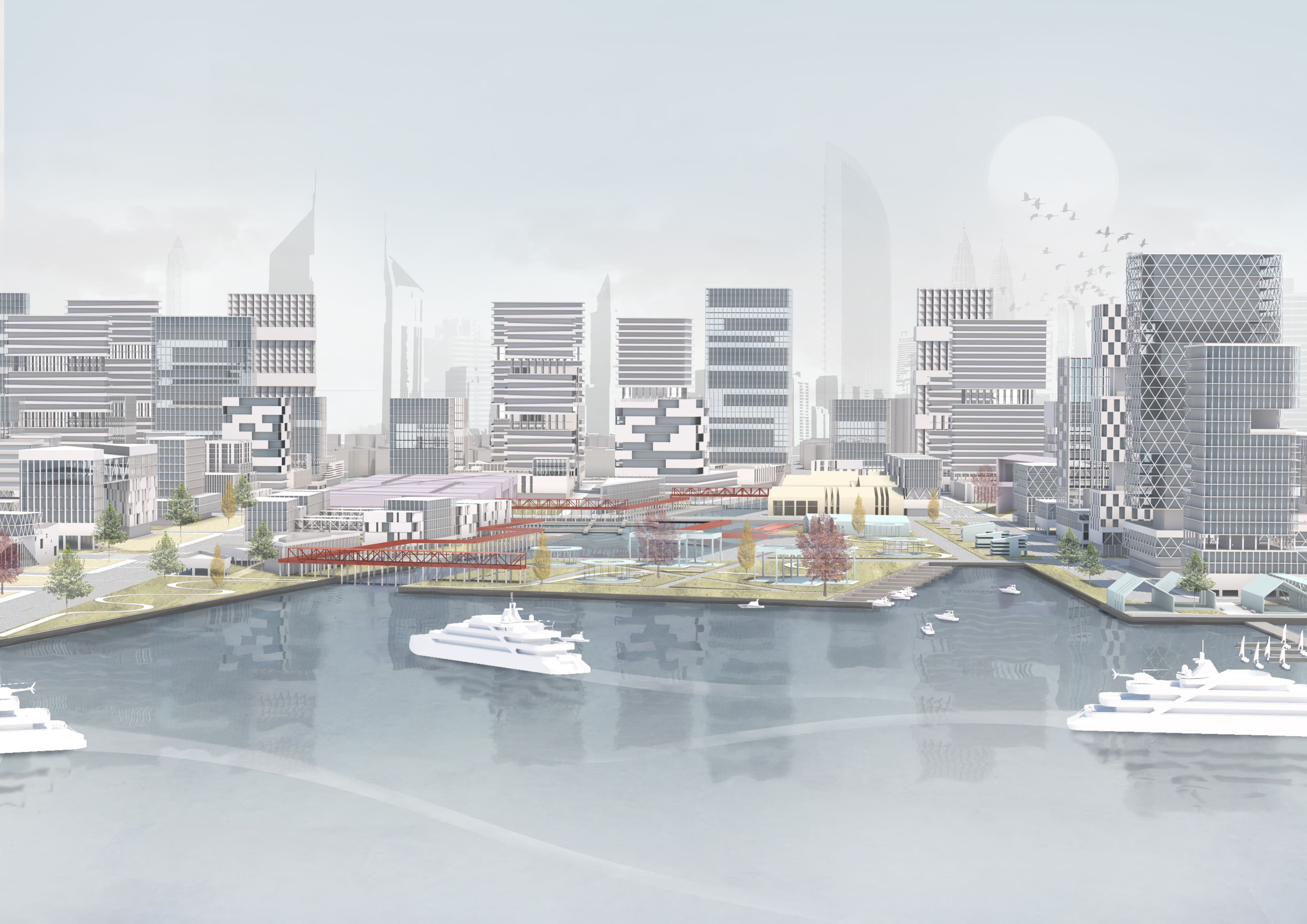
A View from the Yangtze River
The semi-enclosed feature is emphasized by the view of the entire site from the Yangtze River. The form of the green space is also differentiated according to its function, with the natural wetlands serving primarily as a gathering place for people to relax, while the man-made green space provides more hard paved areas and a marina to add vibrancy to the waterfront.