Stapling the Urban Grid
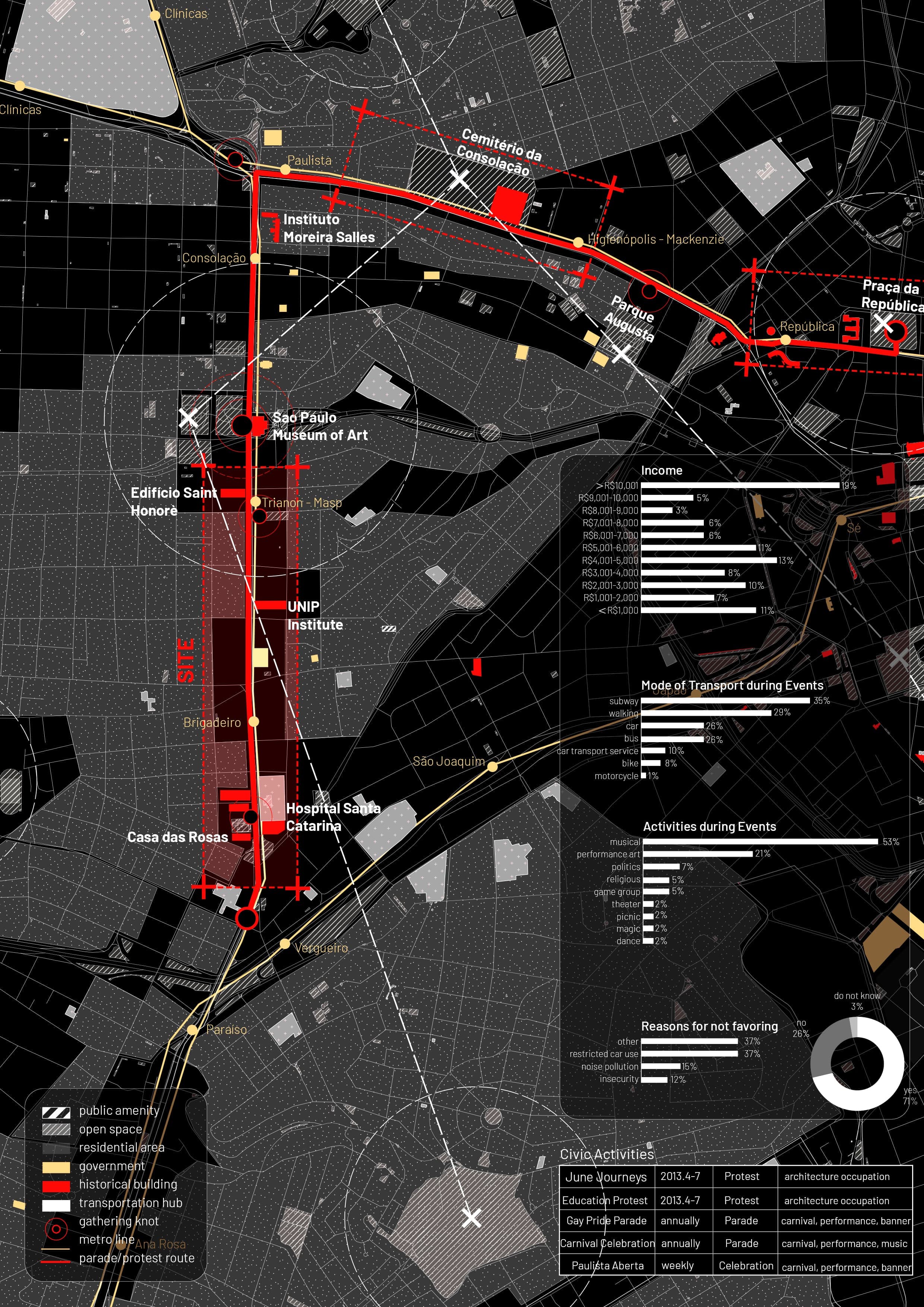
Paulista Avenue:A Significant Passageway
Paulista Avenue, once a historic boulevard, has been overtaken by high-rises that fractured nearby residential areas. The project introduces connectors between these contrasting scales—linking homes, towers, and street life. By inserting new public nodes, it restores spaces for movement, gathering, and celebration, allowing the avenue to regain its civic rhythm and identity.
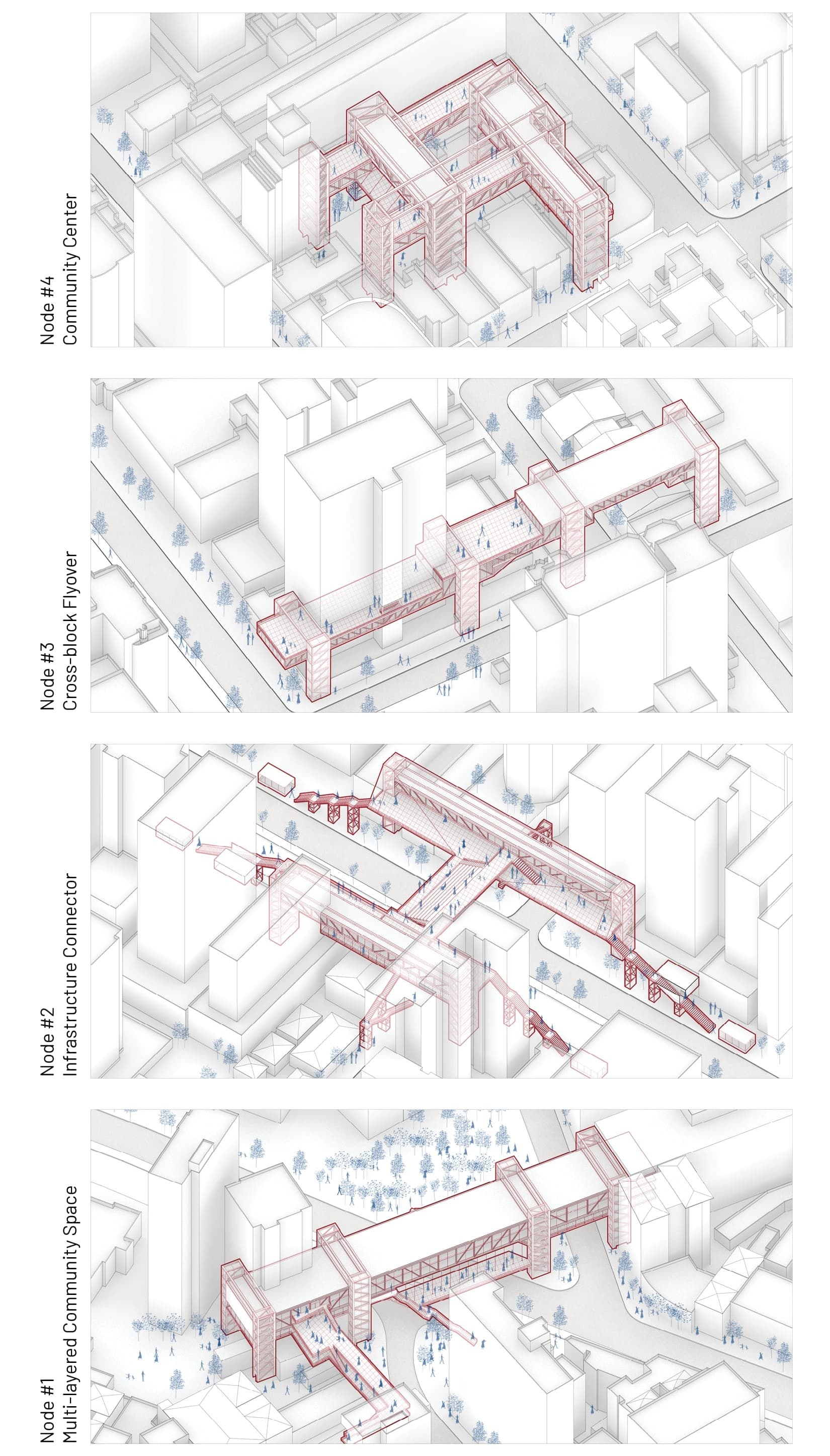
Node Axons
Through the same structural system and prototypes, four public space different in functions and combinations have been designed to address different street issues.
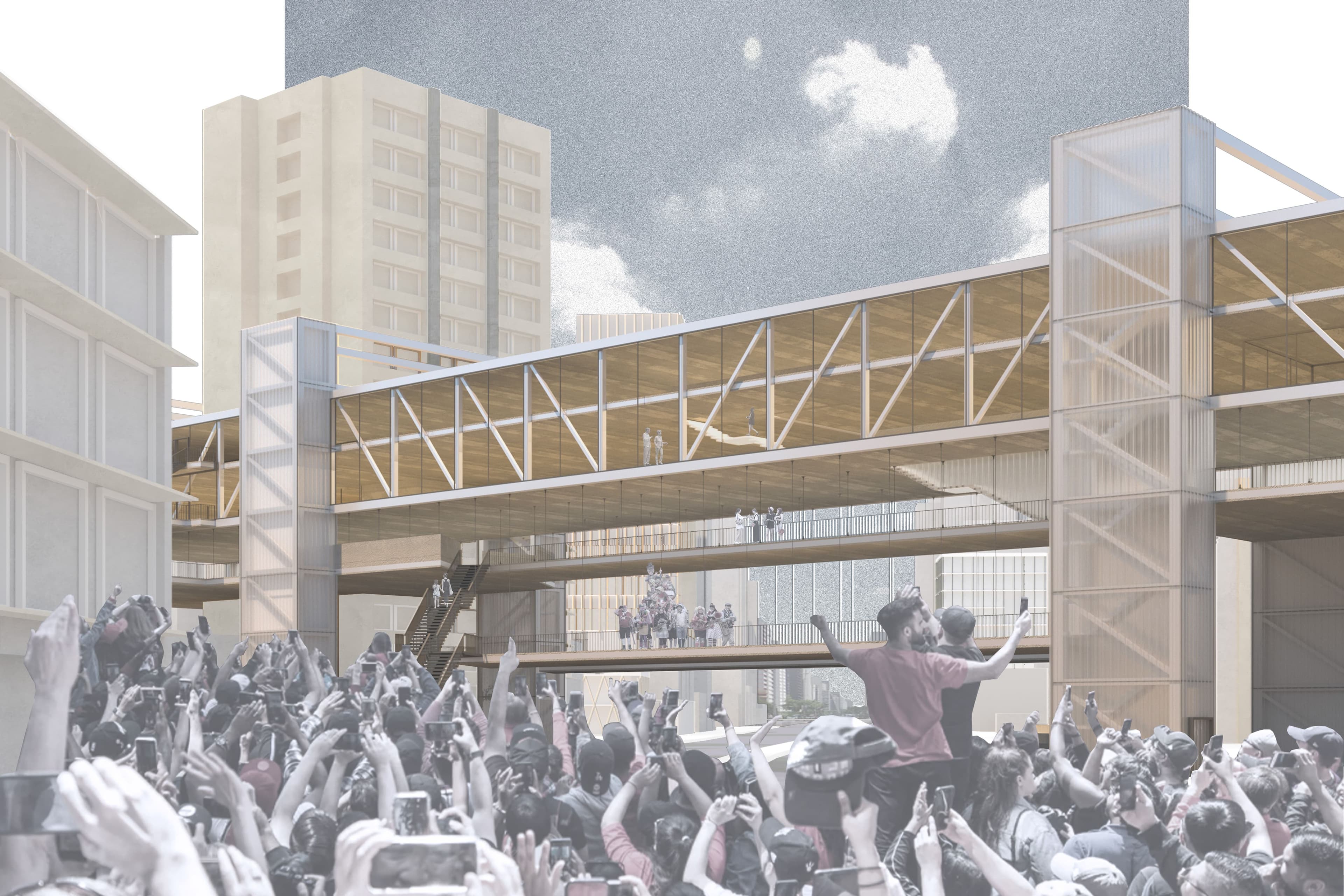
Multi-layered Community Space
The joint of several roads creates a large-scale unused space where it is difficult to cross several streets or to carry out activities on the site. Therefore, a community connector to connect the branches of the roads and allows for multi-level activities is designed. One end of the architecture connects to the low-rise residential area and then across the road to the complex on the other side.
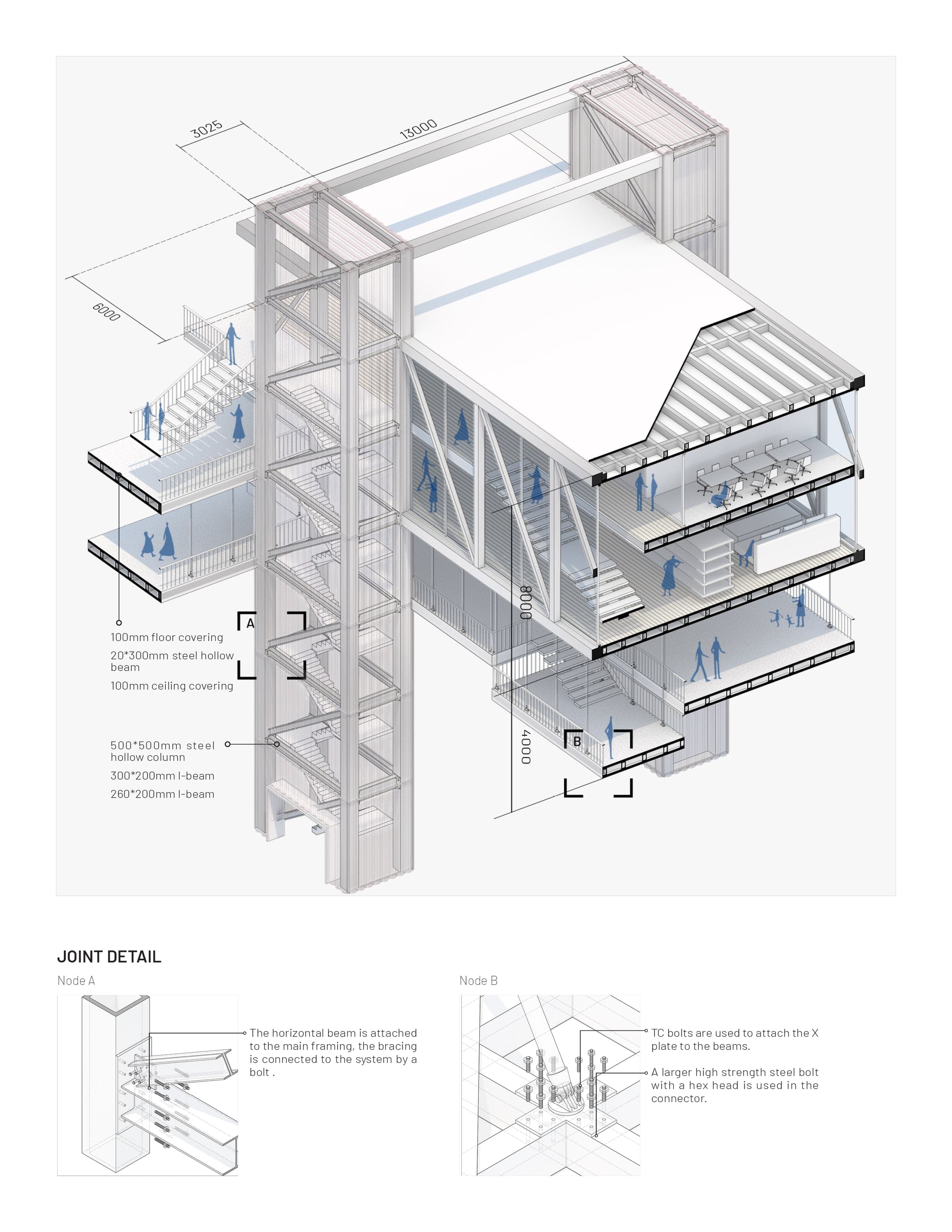
Structural Details
The architecture uses a combination of portal structures and sling pulleys to suspend and move the panels.
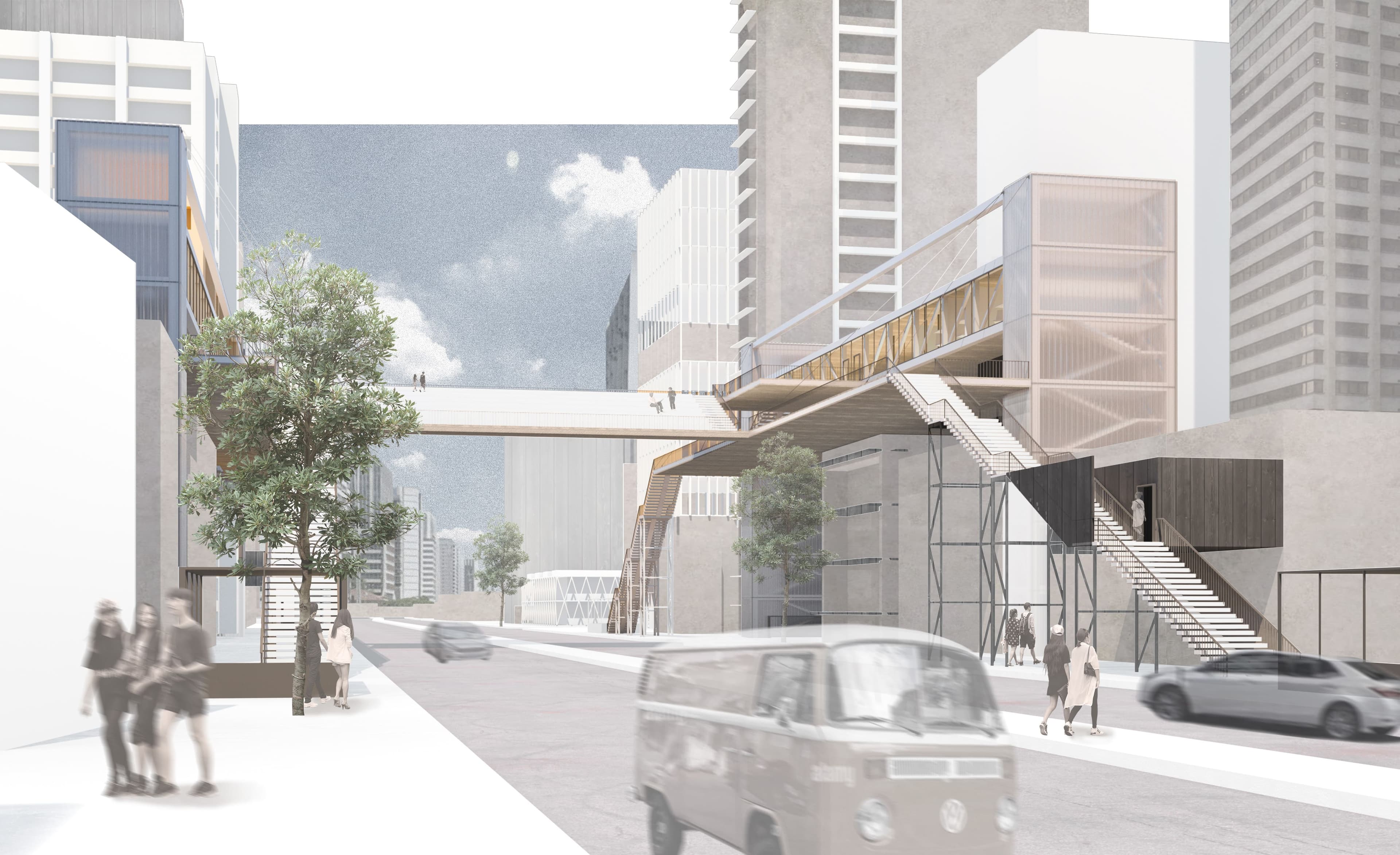
Infrastructure Connector
The newly added system uses the fragmented spaces as drop-off points for columns, elevating the connections between the upper floors, while creating sufficient buffer space for the metro stations.
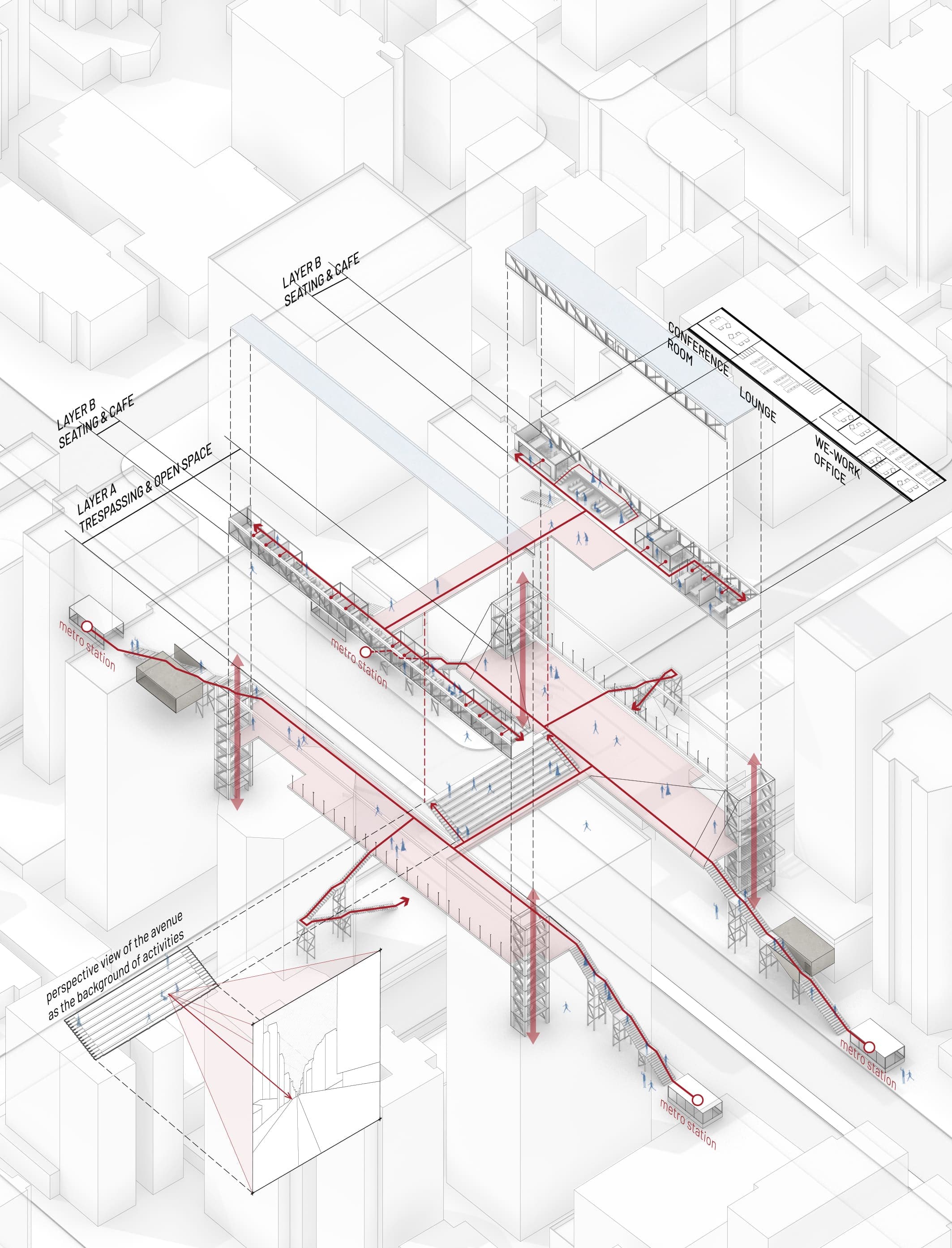
Connecting Infrastructure and Commumity Gathering
The installation of flyovers on both sides of the street connects the underground infrastructure above ground, increasing connectivity between stations while providing a place for pedestrians to stop and rest and enjoy the extended street view from the flyover.
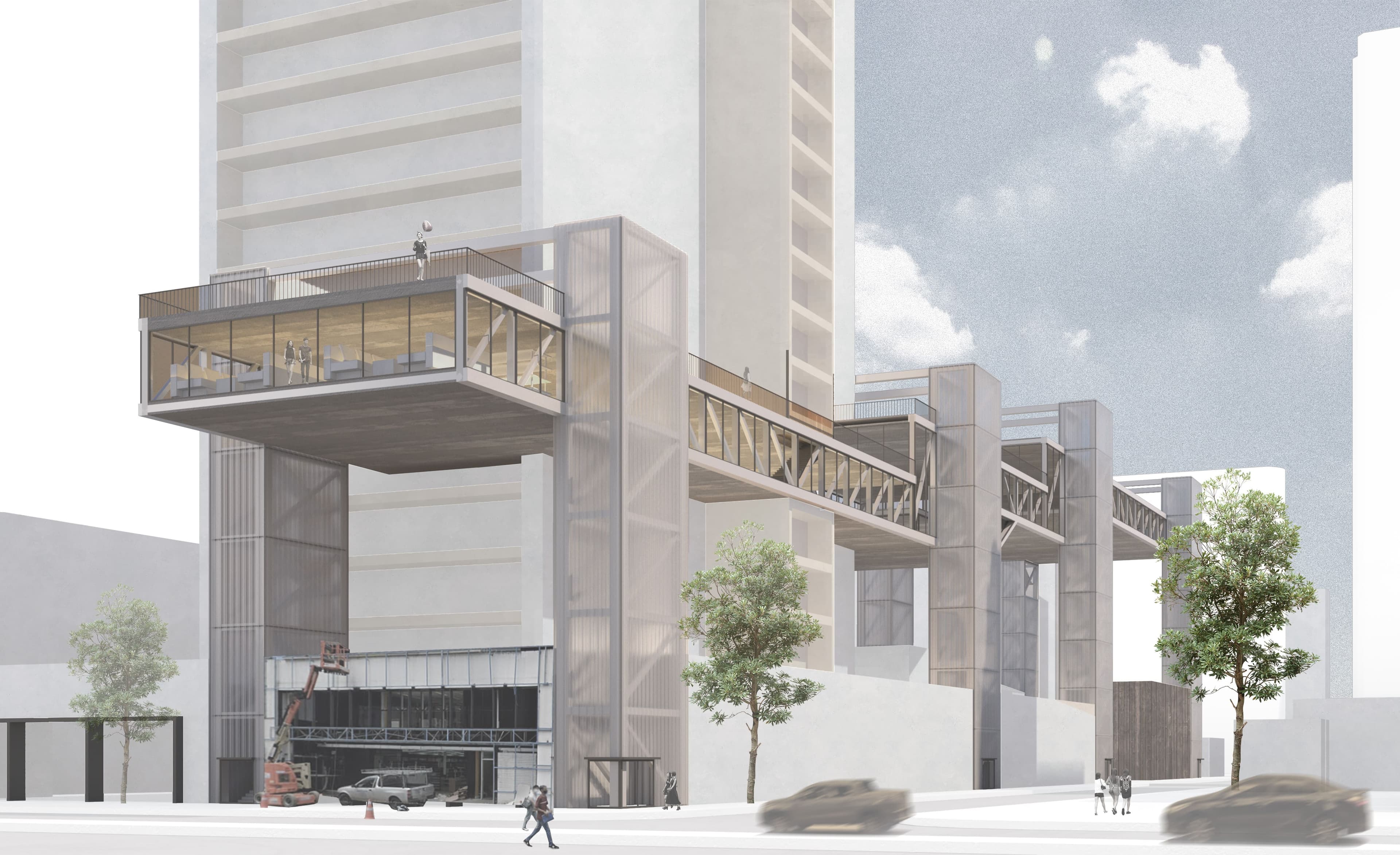
Cross-Block Flyover
The strategy is to build a footbridge from the residential area, embed it into the high-rise and extend it to the street, increasing connectivity while dissipating the volume of the original high-rise.
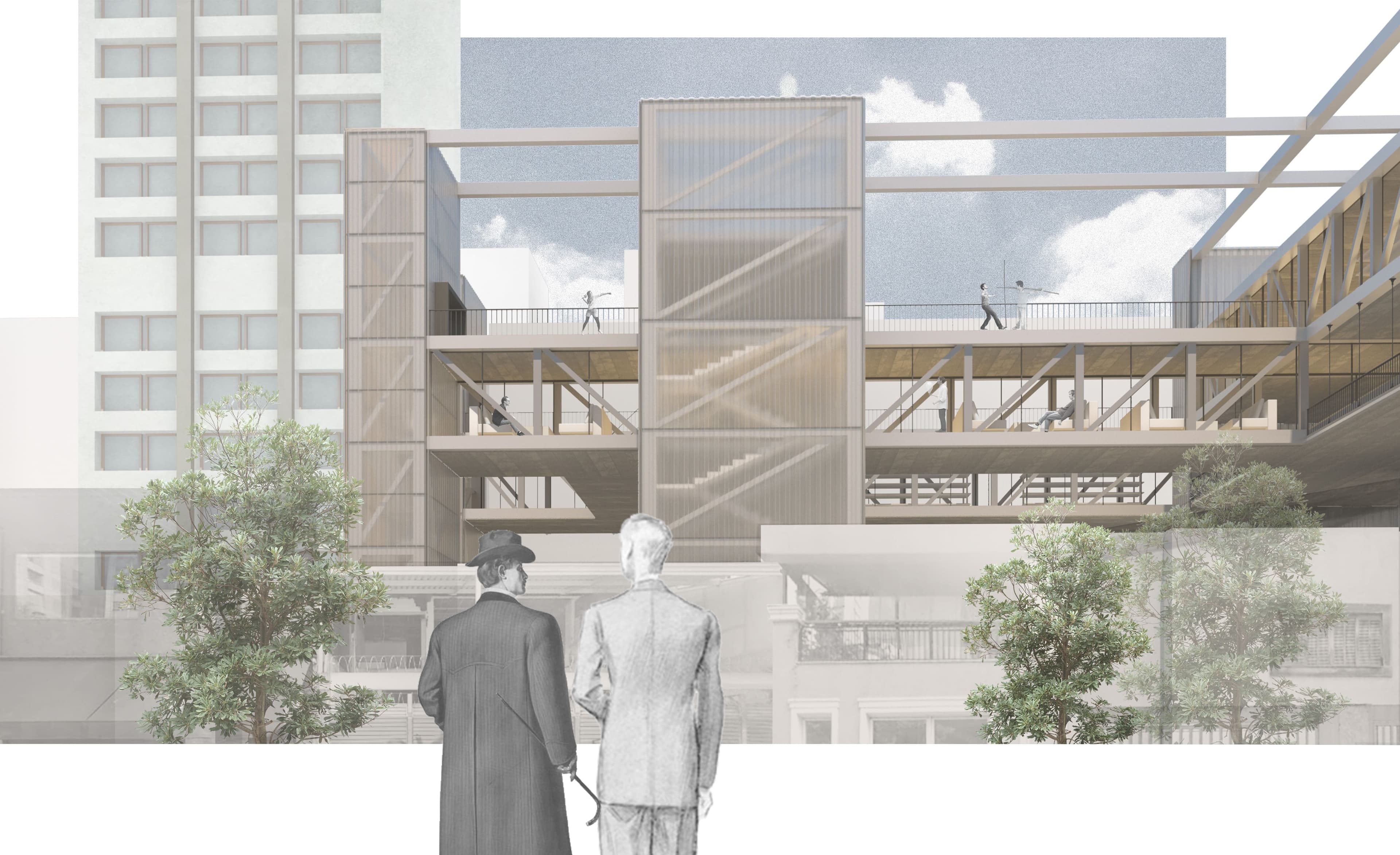
Community Center
Unused plots are selected as a basis to elevate and expand the public spaces of the community. The elevated space allows residents to hold group activities and enhance neighborhood interaction.