Gear the Change
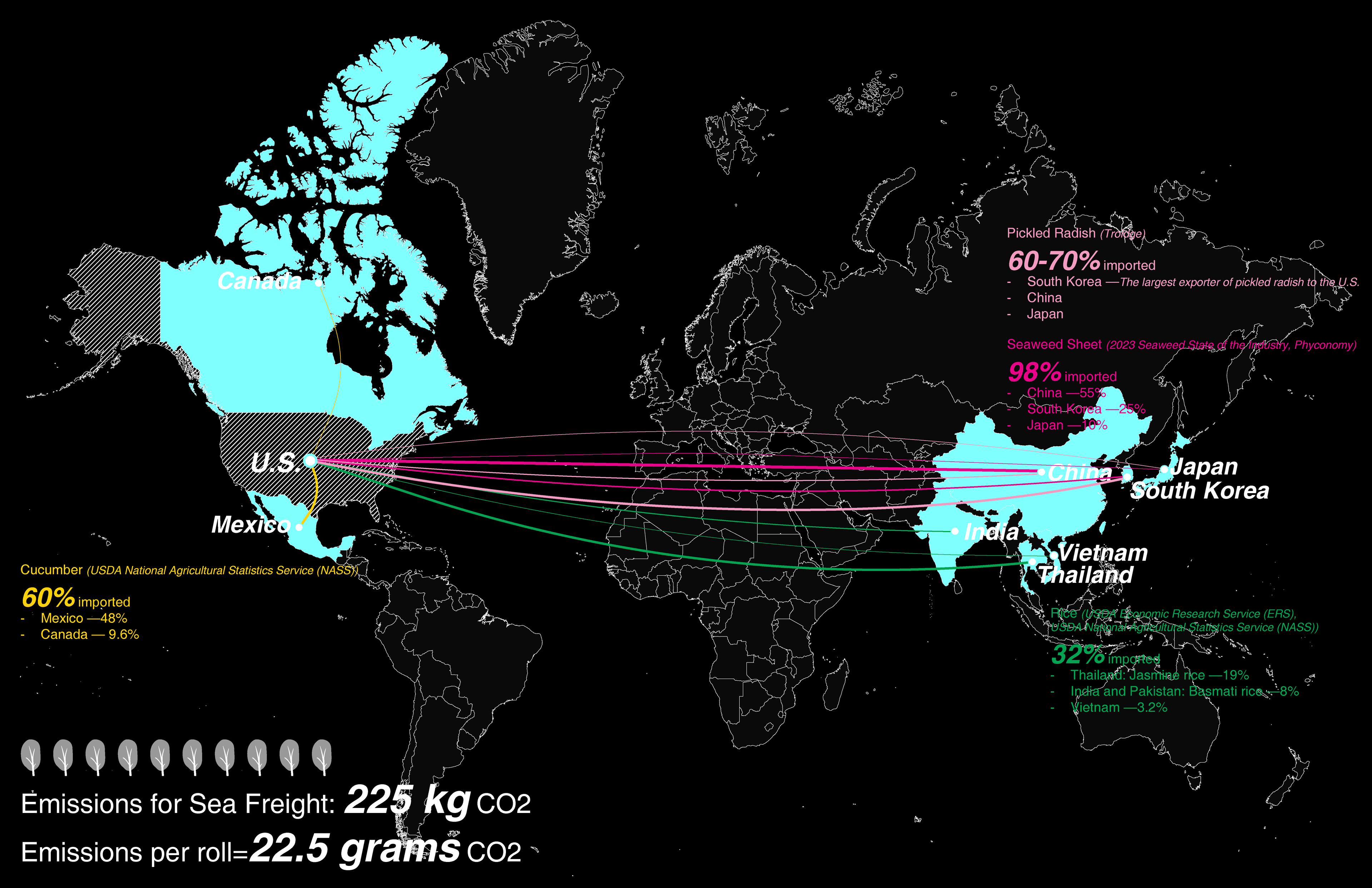
Global Supply Chain of Ingredients for Kimbap
Have you ever wondered what impact did you make by simply ordering a roll of kimbap?
This project explores the environmental and socioeconomic impact of the delivery network that brings ingredients to your plate.
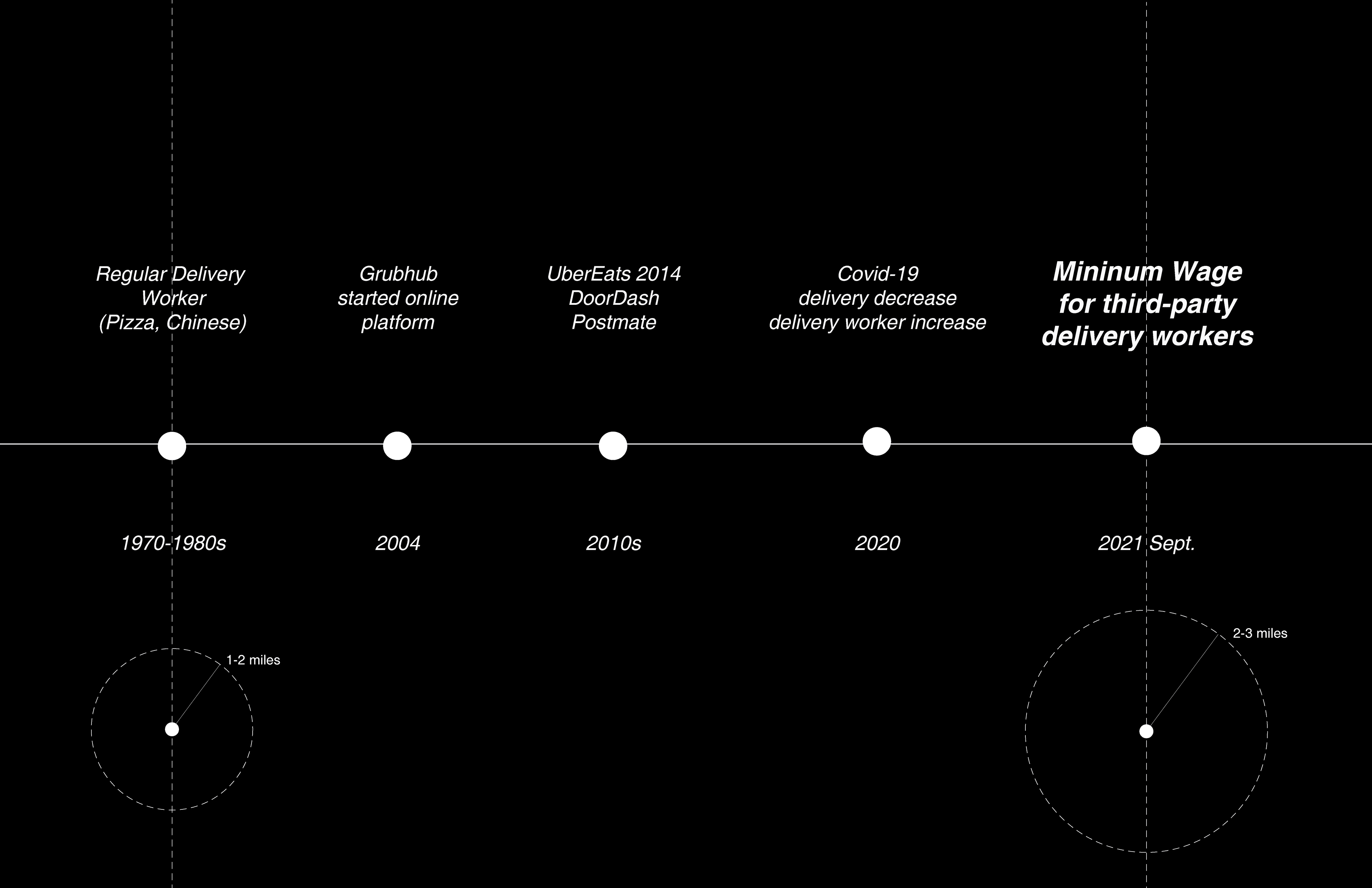
The Evolution of Delivery Network
Since the 1970s, restaurants have employed regular delivery workers to bring food to customers, typically within a 1-2 mile radius. Entering the 21st century, online platforms such as Grubhub, UberEats, and DoorDash have become dominant in the industry, relying on third-party workers paid at minimum wage. As a result, the average delivery radius has expanded to 2-3 miles.
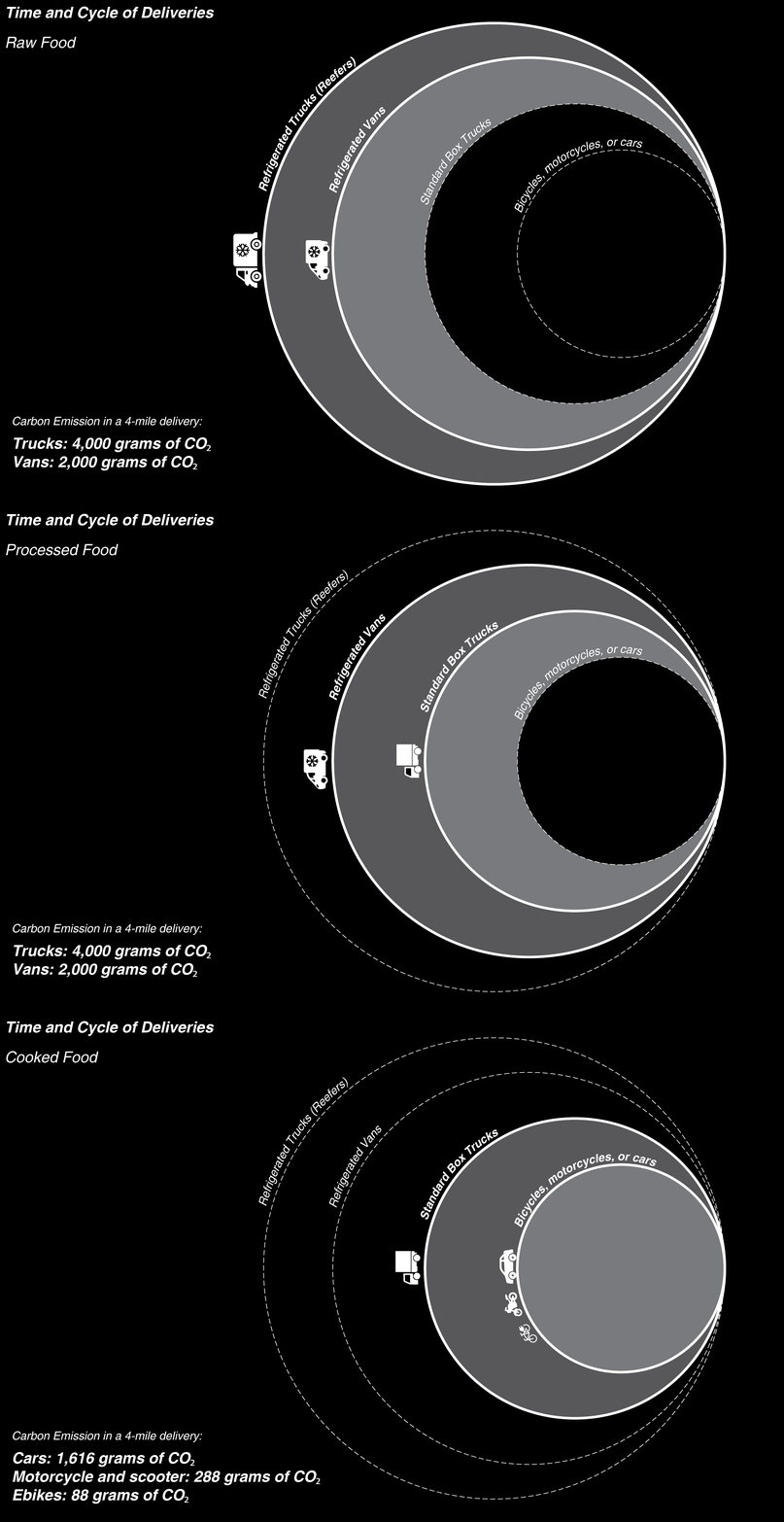
Time and Cycle of Delivery
Depending on the type of ingredients and food, the choice of vehicle, delivery cycle, and emission levels vary.

Breakdown of Delivery Bill
The delivery fee you pay is divided among the restaurant, the city, the platform, and the delivery worker.
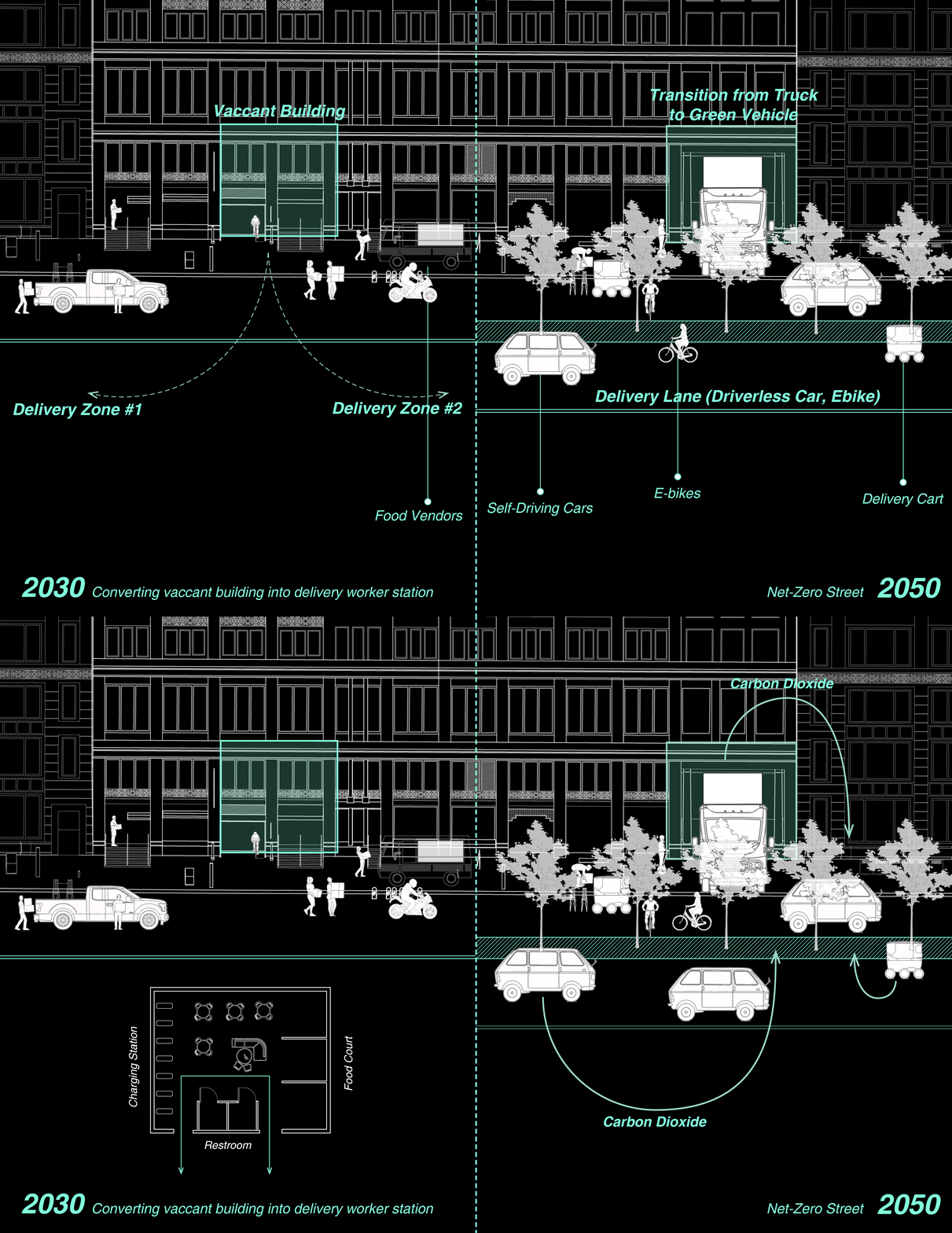
2030 and 2050: Imagine a New Delivery Network
The project proposes converting vacant buildings into micro-delivery hubs that offer facilities and amenities for delivery workers. Over time, this network will help reshape the street into a more pedestrian-friendly, safer, and sustainable environment.
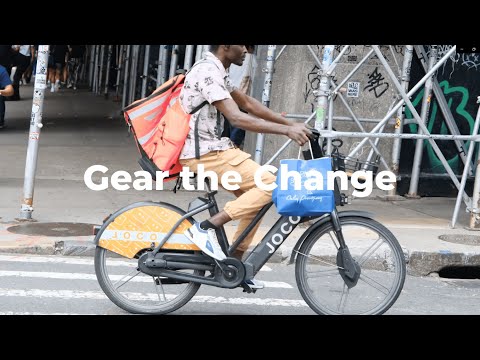
Gear the Change
Watch the video to see the potential of a new delivery network through the perspective of a kimbap.